Owning mistakes and making repairs
Tell the truth, apologize clearly, and follow through on a repair.
Skill 1.2 · About 25 minutes to begin
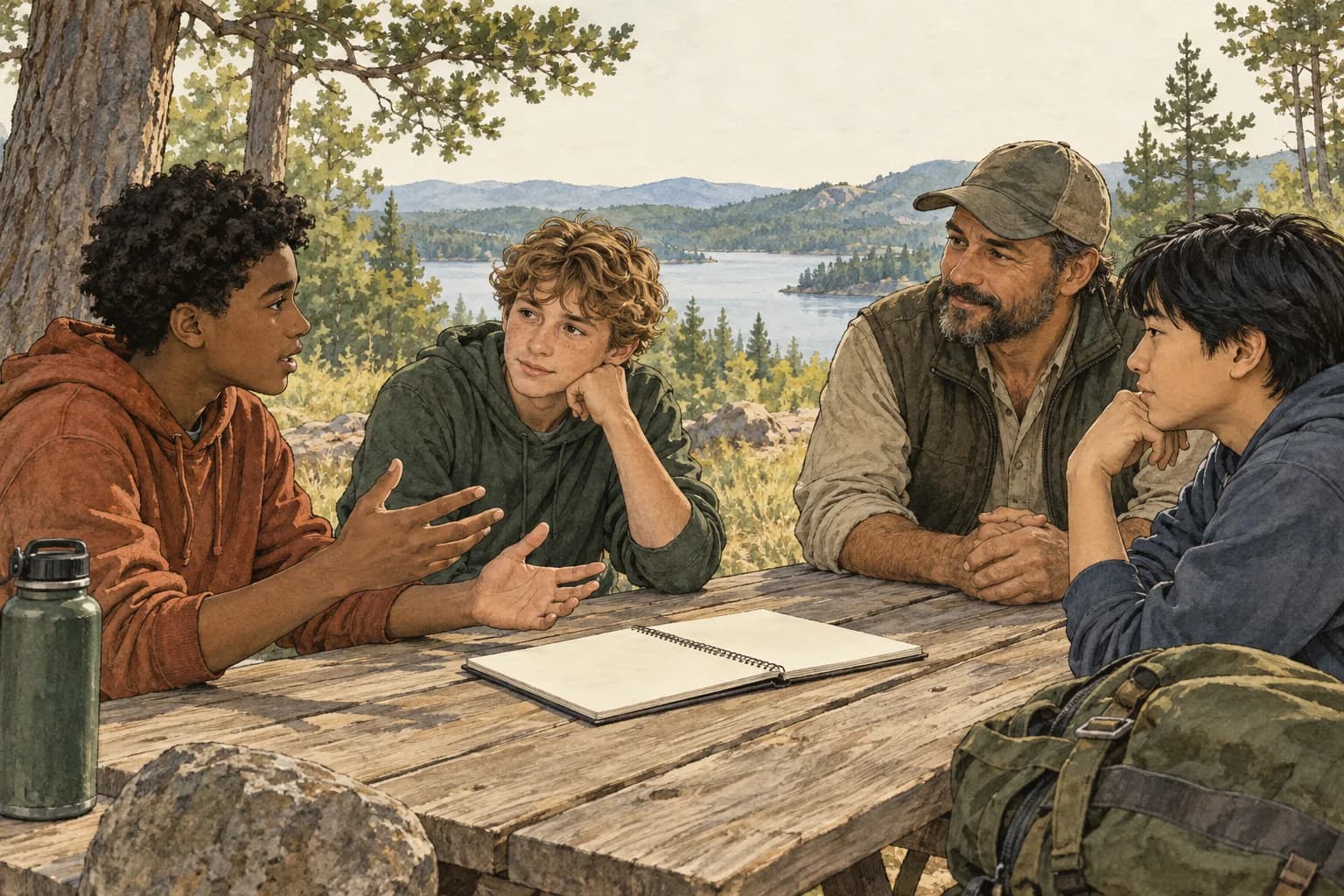
You will forget things, misunderstand people, and sometimes make poor choices. Character shows in what you do after that moment. A good apology makes room for the other person's experience.
Before you begin
Bring along
- Notebook
- Practice partner
Support & boundaries
Use fictional situations and choose what you share. You may pass or speak privately with a trusted adult. Unsafe behavior or a serious concern needs adult support.
01 / Learn
Understand the skill
- An explanation can provide context; it does not erase the impact.
- An apology does not require the other person to forgive you immediately.
- Repair may mean replacing something, correcting information, or changing a habit.
Explore the idea
A conversation you can practice
Name the specific situation and what you need, without attacking the other person's character.
02 / Practice
Try it, step by step
- 1
Describe what you did without blaming someone else: I left the equipment outside.
- 2
Name the impact: That made extra work and could have damaged it.
- 3
Say you are sorry without adding a but. Listen to the response.
- 4
Offer a specific repair and ask whether it would help. Do not promise what you cannot deliver.
- 5
Make the repair and choose a prevention step, such as a return checklist.
Common mistakes to avoid
- Return it quietly and hope nobody notices.
- Treating a successful practice attempt as permission to skip the supervision or checks for a real task.
Your call
You damaged a borrowed item. What starts a useful repair?
03 / Demonstrate
Show what you can do
Use these prompts with a mentor. This practice checklist resets when you leave; record your overall stage below in the signed-in manual.
0 of 3 reviewed together
Mentor notes & sources
Help someone learn
- Model a real, appropriate apology for your own mistake.
- Use fictional examples; nobody must disclose a personal conflict to the group.
Start together, then let the learner take responsibility at an appropriate level. Offer a shorter task, a different role, or more practice time when useful. Review the demonstration criteria together; advanced practice never removes supervision requirements.
Reference shelf
Original program lessons informed by these references. Equipment manuals, current local rules, and qualified instruction govern technical practice.
- Search Institute: developmental relationships ↗
Care, support, challenge and youth agency
- Scouting America: aims and methods ↗
Progression, service and youth leadership
Edition updated 2026-09-28. Program learning material; not a professional qualification.
04 / Apply · In Action
Make a repair
Role-play forgetting a borrowed item in the rain. Give an apology and propose a repair you can actually complete.
What success looks like
Your partner can identify the action, its impact, your apology, and the repair.
Talk it through
What changes when you leave excuses out of an apology?
05 / Teach · Take it further
Use the approach privately after a real mistake; discuss only what you are comfortable sharing.