Campfires
When fire is allowed, how to build, tend, and extinguish safely.
Skill 3.11 · About 25 minutes to begin
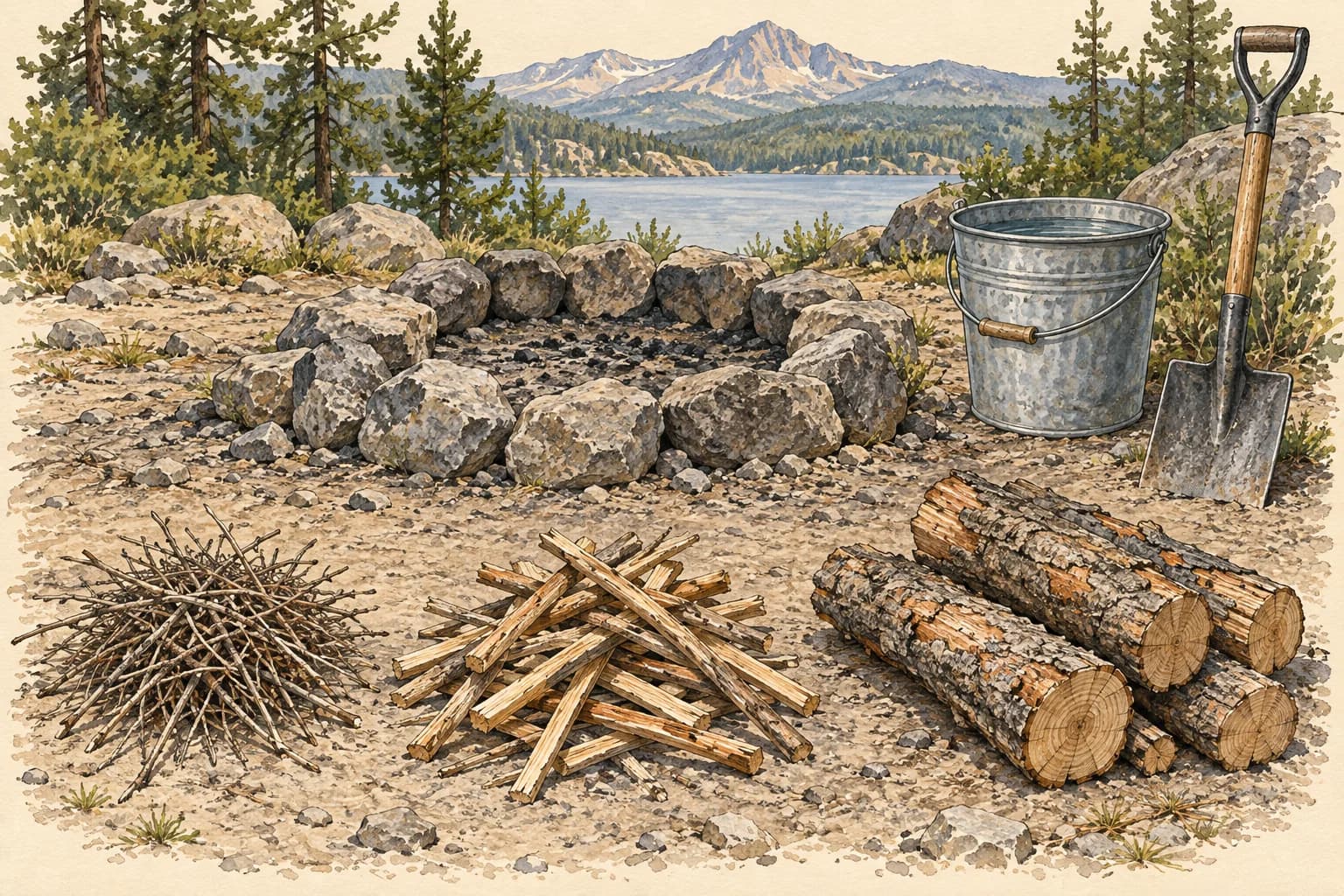
Campfires are optional. Follow current land-manager restrictions without exceptions; use a stove only if that type of stove is also permitted.
Before you begin
Bring along
- Exact equipment manual
- Adult-approved practice area
- Fire control supplies
Support & boundaries
An adult approves the task and supervises heat, sharp tools, and equipment. Follow the exact equipment instructions. Stop if the task exceeds your training or permission.
01 / Learn
Understand the skill
- Check fire restrictions every trip — they change with drought.
- Use existing fire rings; keep fires small and manageable.
- Never leave fire unattended; have water and shovel ready.
- Extinguish until coals are cold to the touch — drown, stir, repeat.
- Collect firewood only where rules allow; do not strip live trees.
02 / Practice
Try it, step by step
- 1
Clear a zone of flammable material around the ring.
- 2
With adult supervision and permission, build with tinder, kindling, then fuel wood. Never use gasoline or liquid accelerants to start a campfire.
- 3
Keep hair and loose clothing away from flames.
- 4
Burn wood completely to ash when possible before leaving site.
- 5
Pack out foil and trash — do not burn plastic.
Common mistakes to avoid
- Let the leader make an exception.
- Treating a successful practice attempt as permission to skip the supervision or checks for a real task.
Your call
A leader wants a fire but current restrictions prohibit it. What next?
03 / Demonstrate
Show what you can do
Use these prompts with a mentor. This practice checklist resets when you leave; record your overall stage below in the signed-in manual.
0 of 3 reviewed together
Mentor notes & sources
Help someone learn
- Assign a fire watch rotation with a clear handoff.
- Teach one-match fire only after basic stove skills are solid.
- Call full stop when wind picks up or group is tired.
Start together, then let the learner take responsibility at an appropriate level. Offer a shorter task, a different role, or more practice time when useful. Review the demonstration criteria together; advanced practice never removes supervision requirements.
Reference shelf
Original program lessons informed by these references. Equipment manuals, current local rules, and qualified instruction govern technical practice.
- National Park Service: cooking in camp ↗
Camp cooking and storage
- Leave No Trace: outdoor ethics ↗
Low-impact outdoor decisions
Edition updated 2026-09-28. Program learning material; not a professional qualification.
04 / Apply · In Action
A fire decision and shutdown
Check current rules with a leader. Rehearse a fire setup without lighting it, or assist with an approved supervised fire.
What success looks like
Identify water, tools, boundaries, and how an adult will confirm the fire is fully out.
Talk it through
When would the right decision be no fire at all?
05 / Teach · Take it further
Teach a dry rehearsal to the crew before any ignition.