Trail food and meal planning
Calories, hydration, simple menus, and allergies.
Skill 3.10 · About 25 minutes to begin
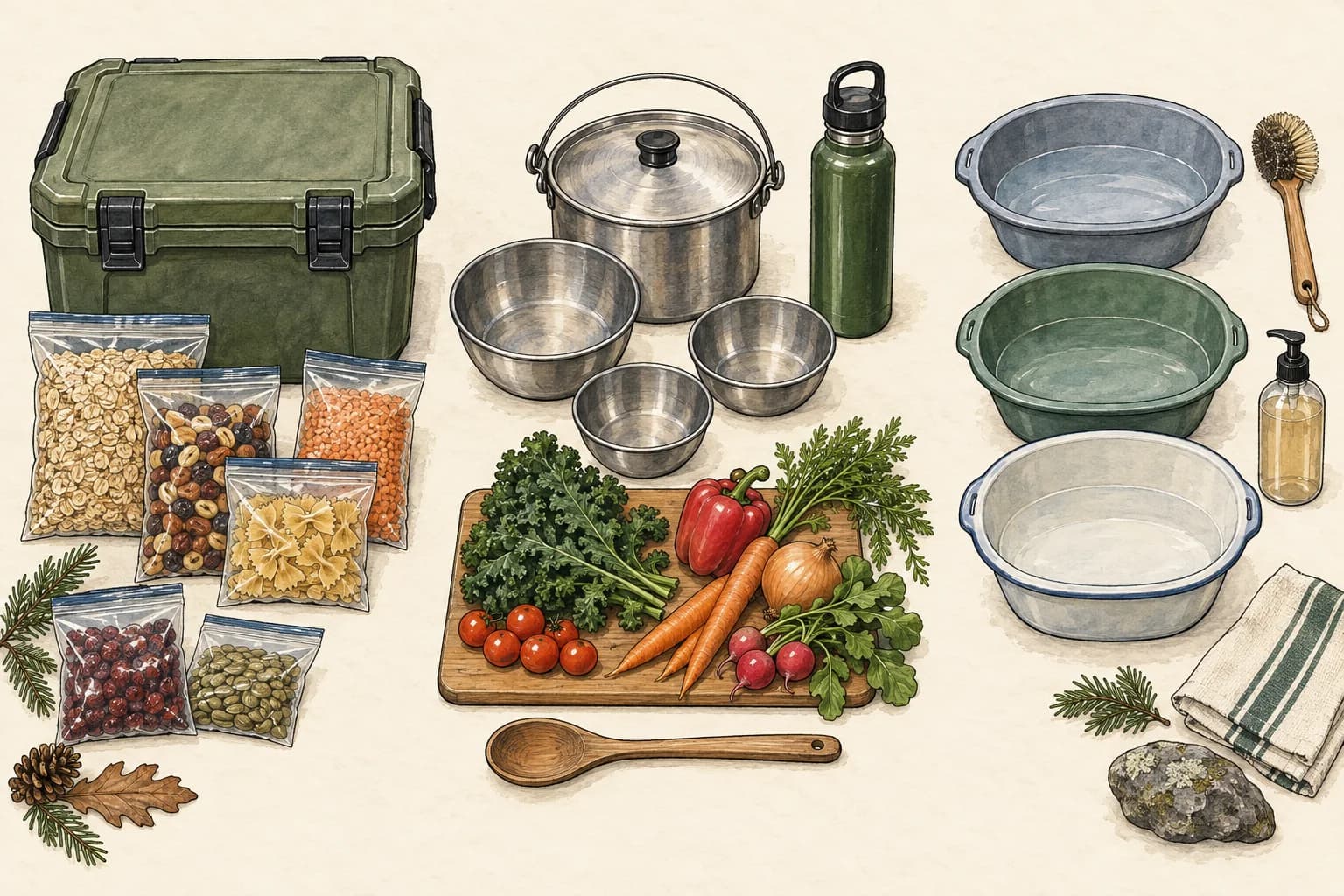
Eat and drink steadily on trail days. Bonking from low calories makes navigation and teamwork harder.
Before you begin
Bring along
- Menu
- Kitchen kit
- Handwashing and cleanup supplies
Support & boundaries
An adult approves the task and supervises heat, sharp tools, and equipment. Follow the exact equipment instructions. Stop if the task exceeds your training or permission.
01 / Learn
Understand the skill
- Active teens often need more snacks than they expect — plan extra.
- Balance carbs for energy, protein for recovery, and salt when sweating.
- Know every member’s allergies and dietary needs before cooking for the group.
- Water treatment is required unless leaders say a source is pre-approved.
- Heavy glass and unnecessary packaging stay home.
Explore the idea
The whole meal is the project
Confirm people and dietary needs, choose quantities, set a budget, and make a shopping and timing plan.
02 / Practice
Try it, step by step
- 1
Pack lunch you can eat without stopping long in cold rain.
- 2
Pre-measure ingredients for group meals into zip bags at home.
- 3
Label allergen-free foods clearly.
- 4
Carry at least one spare meal bar in your pack.
- 5
Drink on a schedule — not only when you feel thirsty.
Common mistakes to avoid
- Assume a small portion is fine.
- Treating a successful practice attempt as permission to skip the supervision or checks for a real task.
Your call
A food package has an unclear ingredient list for a known allergy. What next?
03 / Demonstrate
Show what you can do
Use these prompts with a mentor. This practice checklist resets when you leave; record your overall stage below in the signed-in manual.
0 of 3 reviewed together
Mentor notes & sources
Help someone learn
- Build a shared menu with leaders and parent helpers.
- Make dietary precautions available privately to responsible cooks; do not publish personal health details.
- Teach “eat early, eat often” on hard climb days.
Start together, then let the learner take responsibility at an appropriate level. Offer a shorter task, a different role, or more practice time when useful. Review the demonstration criteria together; advanced practice never removes supervision requirements.
Reference shelf
Original program lessons informed by these references. Equipment manuals, current local rules, and qualified instruction govern technical practice.
- National Park Service: cooking in camp ↗
Camp cooking and storage
- FoodSafety.gov: food safety steps ↗
Food handling and hygiene
Edition updated 2026-09-28. Program learning material; not a professional qualification.
04 / Apply · In Action
A day's food that works
Plan a day-hike menu around the actual crew's needs, carrying weight, water plan, and conditions.
What success looks like
Show portions, packaging, allergy precautions, and a reserve snack.
Talk it through
What would still be easy to eat in cold rain?
05 / Teach · Take it further
Compare two menu options for cost, weight, and preparation.