Camp kitchen setup
Food prep zones, sanitation, and keeping critters out.
Skill 3.9 · About 25 minutes to begin
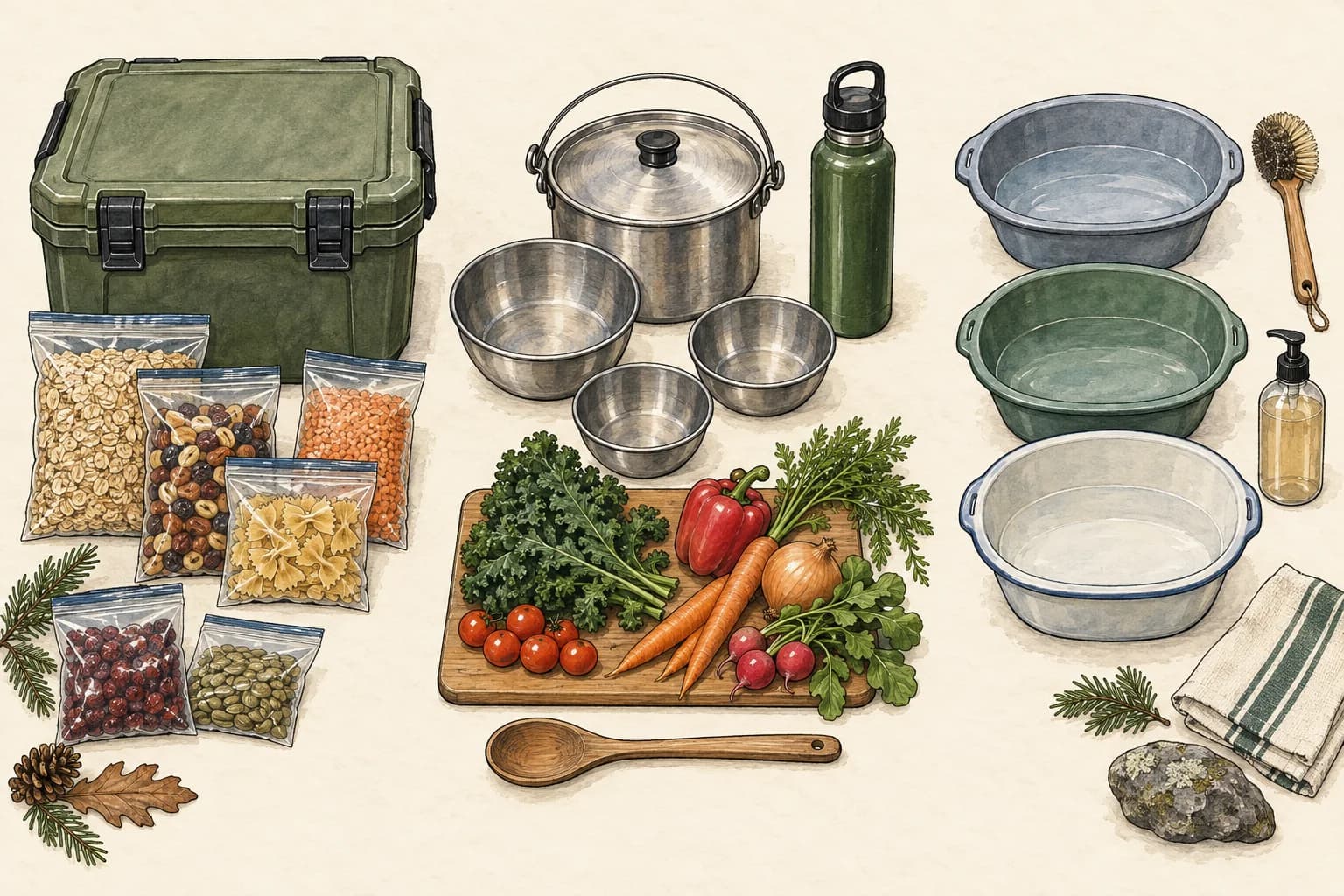
A tidy kitchen prevents illness and keeps animals away from your tent at night.
Before you begin
Bring along
- Menu
- Kitchen kit
- Handwashing and cleanup supplies
Support & boundaries
An adult approves the task and supervises heat, sharp tools, and equipment. Follow the exact equipment instructions. Stop if the task exceeds your training or permission.
01 / Learn
Understand the skill
- Keep raw meat and its utensils separate from ready-to-eat foods on every trip.
- Wash hands with soap and safe water before preparing food and after bathroom breaks. Plan a proper handwashing station.
- Store food and trash in approved containers or vehicles as leaders direct.
- Grey water (dish water) should be strained and scattered away from camp and water sources per leader briefing.
- Knives stay supervised; cut away from your body on a stable surface.
Explore the idea
The whole meal is the project
Confirm people and dietary needs, choose quantities, set a budget, and make a shopping and timing plan.
02 / Practice
Try it, step by step
- 1
Set kitchen downwind of tents if smoke is a factor.
- 2
Hang or store food before dark.
- 3
Use a collapsible sink or pot system for dish line: wash, rinse, sanitize if needed.
- 4
Assign cook, assistant, and cleanup roles before you start.
- 5
Pack out all food waste when required — do not bury scraps.
Common mistakes to avoid
- Wipe it on a towel and serve.
- Treating a successful practice attempt as permission to skip the supervision or checks for a real task.
Your call
A utensil used on raw food is needed for serving. What next?
03 / Demonstrate
Show what you can do
Use these prompts with a mentor. This practice checklist resets when you leave; record your overall stage below in the signed-in manual.
0 of 3 reviewed together
Mentor notes & sources
Help someone learn
- Draw a simple kitchen map on a napkin for new crews.
- Rotate jobs so everyone learns cook and cleanup.
- Inspect coolers and ice plan before leaving town.
Start together, then let the learner take responsibility at an appropriate level. Offer a shorter task, a different role, or more practice time when useful. Review the demonstration criteria together; advanced practice never removes supervision requirements.
Reference shelf
Original program lessons informed by these references. Equipment manuals, current local rules, and qualified instruction govern technical practice.
- National Park Service: cooking in camp ↗
Camp cooking and storage
- FoodSafety.gov: food safety steps ↗
Food handling and hygiene
Edition updated 2026-09-28. Program learning material; not a professional qualification.
04 / Apply · In Action
Set up a working kitchen
Lay out food storage, handwashing, preparation, cooking, and dish-cleaning zones with an adult.
What success looks like
Walk a partner through the route from clean hands to safe food and cleaned equipment.
Talk it through
Where could dirty equipment cross into the clean area?
05 / Teach · Take it further
Run a cleanup rotation so everyone practices each job.