Leave No Trace
Seven principles adapted for our trips and service mindset.
Skill 3.8 · About 25 minutes to begin
We leave places better because good stewardship shows in action — on trails, rivers, and neighbors’ yards.
Before you begin
Bring along
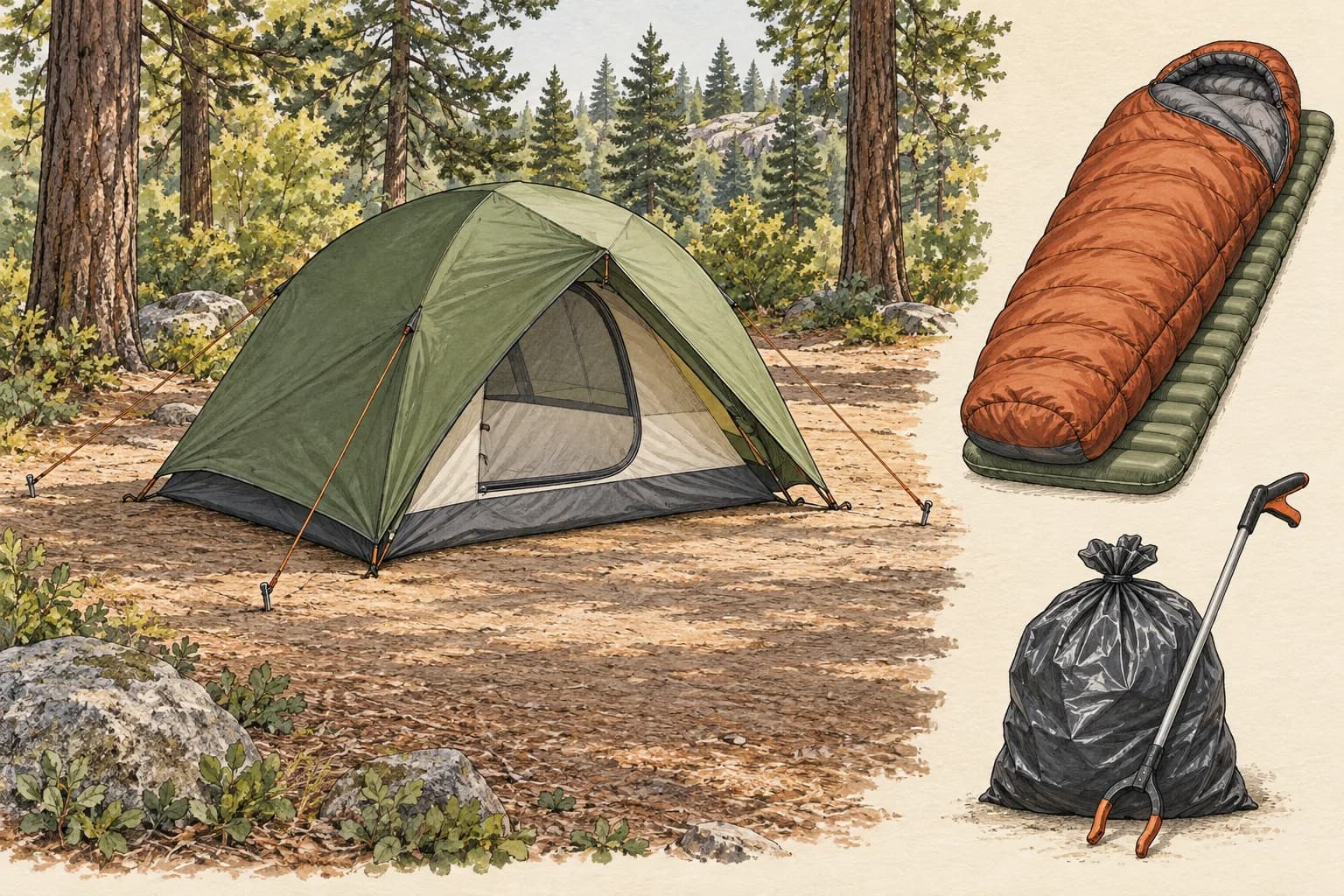
- Tent, pad, and sleeping bag
- Site rules
- Approved practice space
Support & boundaries
Choose an age-appropriate task with your leader or trusted adult. Outdoor practice follows the approved route, buddy, and supervision plan; adapt the challenge to your abilities.
01 / Learn
Understand the skill
- Plan ahead and prepare — reduces rescue impact and resource damage.
- Travel and camp on durable surfaces.
- Dispose of waste properly — pack it out, including food scraps in many forests.
- Leave what you find — rocks, plants, artifacts stay put.
- Minimize campfire impacts — use stoves when fire risk is high.
- Respect wildlife — store food, observe from distance.
- Be considerate of other visitors — quiet voices, yield on trail.
02 / Practice
Try it, step by step
- 1
Pick up trash you did not drop when it is safe to do so.
- 2
Use established fire rings only when fires are allowed.
- 3
Dig catholes correctly where toilet paper must be packed out — leaders brief local practice.
- 4
Stay on trail through mud; do not cut switchbacks.
- 5
Photograph nature instead of collecting souvenirs.
Common mistakes to avoid
- Leave it for wildlife.
- Treating a successful practice attempt as permission to skip the supervision or checks for a real task.
Your call
A small food scrap is biodegradable. What should you do?
03 / Demonstrate
Show what you can do
Use these prompts with a mentor. This practice checklist resets when you leave; record your overall stage below in the signed-in manual.
0 of 3 reviewed together
Mentor notes & sources
Help someone learn
- Assign a “trash sweep” line before leaving camp.
- Teach one LNT principle per meeting for a month.
- Call out good examples publicly; coach privately when someone forgets.
Start together, then let the learner take responsibility at an appropriate level. Offer a shorter task, a different role, or more practice time when useful. Review the demonstration criteria together; advanced practice never removes supervision requirements.
Reference shelf
Original program lessons informed by these references. Equipment manuals, current local rules, and qualified instruction govern technical practice.
- National Park Service: setting up camp ↗
Campsite preparation
- Leave No Trace: outdoor ethics ↗
Low-impact outdoor decisions
Edition updated 2026-09-28. Program learning material; not a professional qualification.
04 / Apply · In Action
Leave the site ready
Inspect an approved campsite or picnic area before and after your visit. Choose ways to reduce your impact.
What success looks like
Account for food scraps, rubbish, and any moved items while following local rules.
Talk it through
What effect could this visit have if a hundred groups did the same thing?
05 / Teach · Take it further
Teach one low-impact habit during your next outing.