Sleep systems
Pads, bags, quilts, and staying warm without overheating.
Skill 3.7 · About 25 minutes to begin
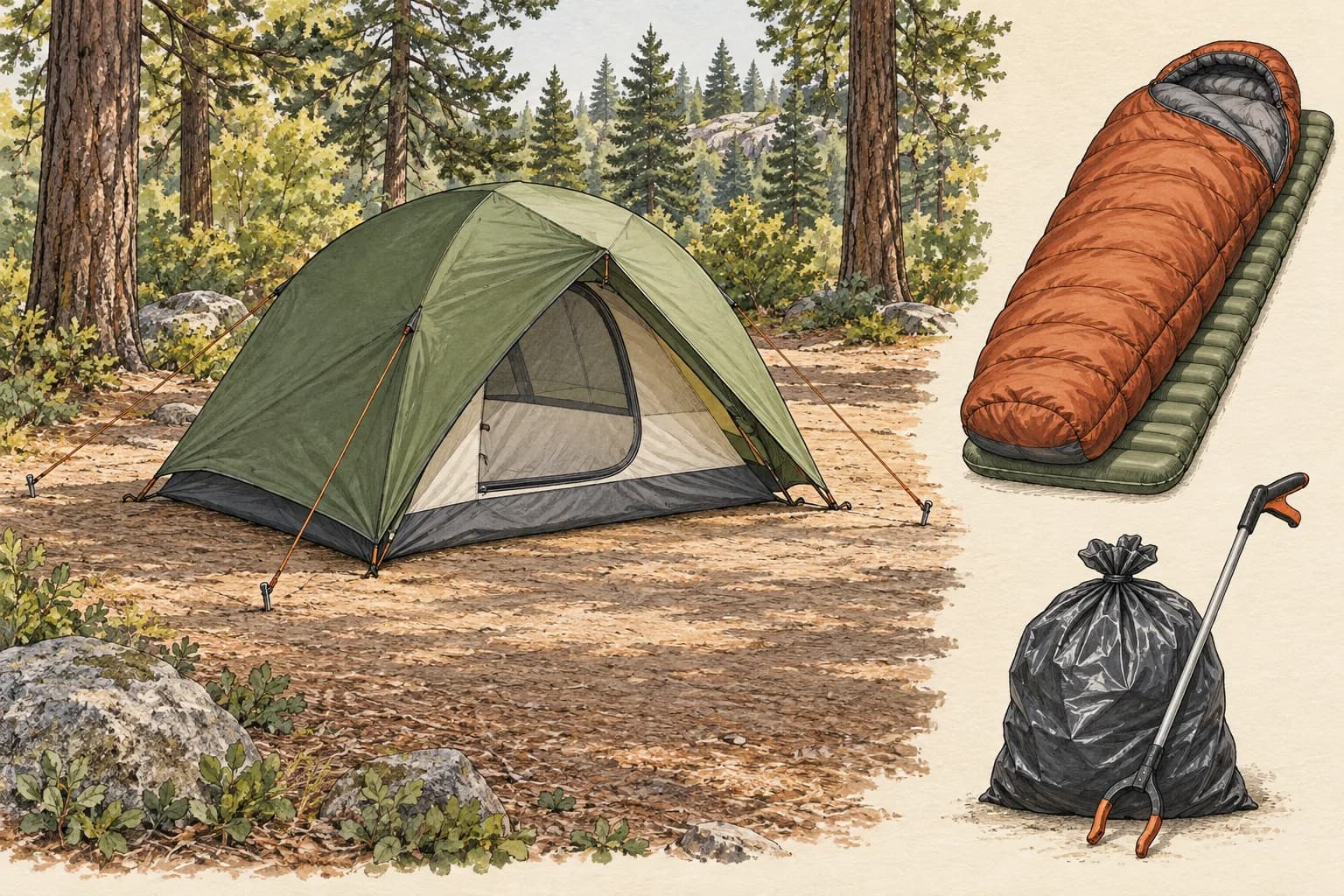
Sleep fuels the next day. Cold or poor sleep leads to mistakes on trail.
Before you begin
Bring along
- Tent, pad, and sleeping bag
- Site rules
- Approved practice space
Support & boundaries
Choose an age-appropriate task with your leader or trusted adult. Outdoor practice follows the approved route, buddy, and supervision plan; adapt the challenge to your abilities.
01 / Learn
Understand the skill
- Insulation under you (pad) matters as much as insulation on top (bag or quilt).
- Match bag rating to expected low temp; wear dry base layers to bed.
- Vent the tent slightly to reduce condensation.
- Keep tomorrow’s clothes in the bag if cold — not wet socks.
- Inflatable pads can puncture — carry a patch kit or foam backup on long trips.
02 / Practice
Try it, step by step
- 1
Inflate pad firm enough you do not touch ground when on your side.
- 2
Fluff sleeping bag before bed; zip fully in cold, vent in heat.
- 3
Use a liner or wear clean base layers — body oils reduce loft over time.
- 4
Store food-scented items out of the tent.
- 5
In morning, air bag before stuffing if time allows.
Common mistakes to avoid
- Only an extra pillow.
- Treating a successful practice attempt as permission to skip the supervision or checks for a real task.
Your call
A warm sleeping bag has no insulating pad beneath it. What is missing?
03 / Demonstrate
Show what you can do
Use these prompts with a mentor. This practice checklist resets when you leave; record your overall stage below in the signed-in manual.
0 of 3 reviewed together
Mentor notes & sources
Help someone learn
- Teach the sit-kneel-lie test for pad thickness on loaner gear.
- Check that everyone has something under them — not just a blanket on tent floor.
- Remind crew about quiet hours and headlamp courtesy.
Start together, then let the learner take responsibility at an appropriate level. Offer a shorter task, a different role, or more practice time when useful. Review the demonstration criteria together; advanced practice never removes supervision requirements.
Reference shelf
Original program lessons informed by these references. Equipment manuals, current local rules, and qualified instruction govern technical practice.
- National Park Service: setting up camp ↗
Campsite preparation
- Leave No Trace: outdoor ethics ↗
Low-impact outdoor decisions
Edition updated 2026-09-28. Program learning material; not a professional qualification.
04 / Apply · In Action
Build a dry sleep setup
Lay out a pad, suitable bag, and dry clothing for the planned overnight forecast.
What success looks like
Explain insulation beneath you and how the bag stays dry during travel.
Talk it through
What would you do if the bag got wet before bedtime?
05 / Teach · Take it further
Help inspect the group's sleep equipment before departure.