Campsite selection
Pick durable surfaces, manage drainage, and respect neighbors.
Skill 3.5 · About 25 minutes to begin
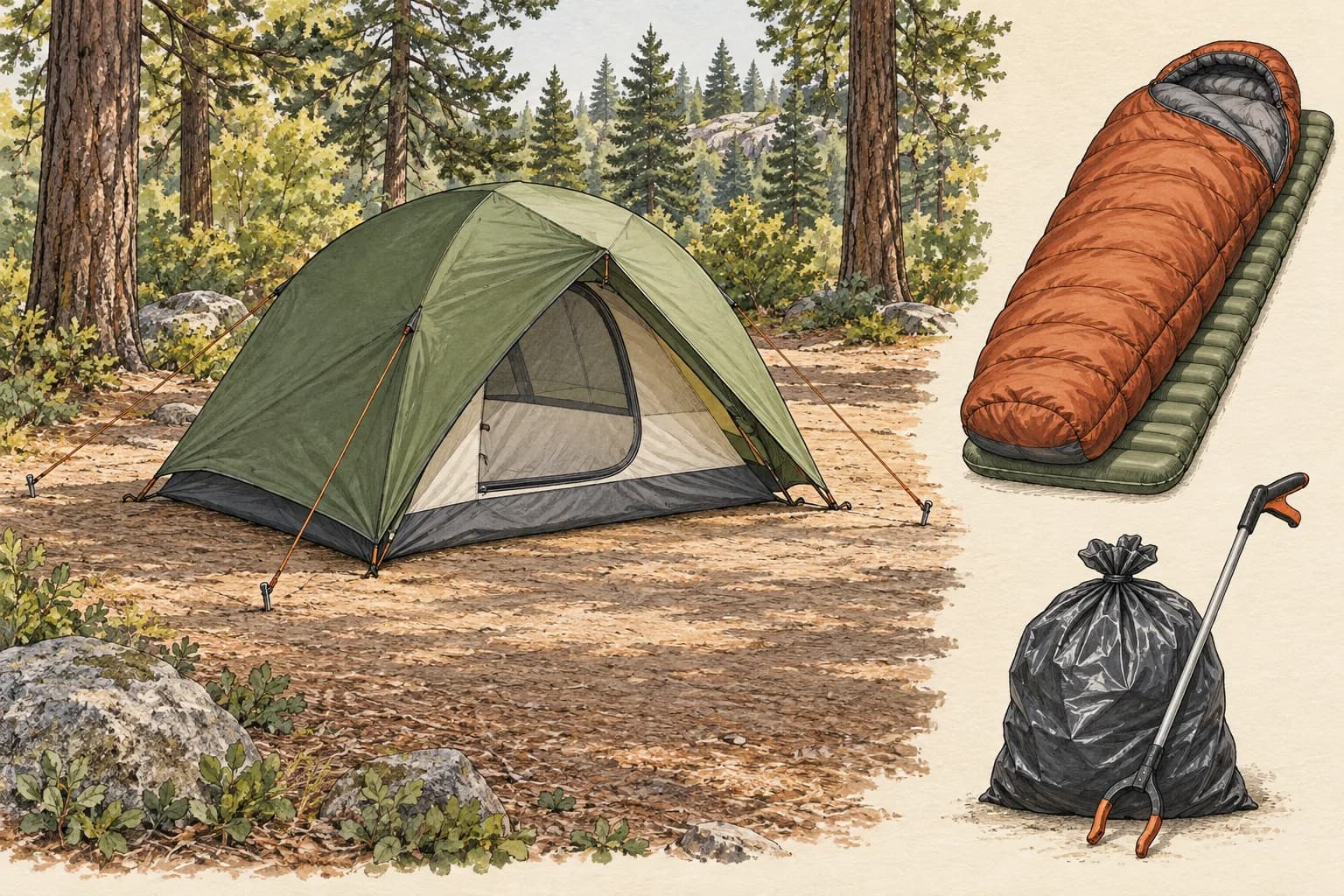
A good site makes camp chores easy and protects the forest for the next crew.
Before you begin
Bring along
- Tent, pad, and sleeping bag
- Site rules
- Approved practice space
Support & boundaries
Choose an age-appropriate task with your leader or trusted adult. Outdoor practice follows the approved route, buddy, and supervision plan; adapt the challenge to your abilities.
01 / Learn
Understand the skill
- Use existing campsites when available; avoid trampling new vegetation.
- Stay 200 feet from lakes and streams when rules require it — leaders know local rules.
- Look up for dead branches; avoid ravines that flash-flood in rain.
- Wind breaks are nice but not under leaning trees or cliff edges.
- Group size and land rules may limit where you may camp — follow the permit.
02 / Practice
Try it, step by step
- 1
Arrive with daylight to choose site calmly.
- 2
Place tents on level ground with head slightly uphill if possible.
- 3
Store food and scented items as leaders direct (bear bag, canister, vehicle).
- 4
Identify bathroom area and dishwashing spot away from tents and water.
- 5
Walk the site perimeter for glass, holes, or trash before settling in.
Common mistakes to avoid
- Pitch quickly before dark.
- Treating a successful practice attempt as permission to skip the supervision or checks for a real task.
Your call
A flat campsite has a damaged branch overhead. What next?
03 / Demonstrate
Show what you can do
Use these prompts with a mentor. This practice checklist resets when you leave; record your overall stage below in the signed-in manual.
0 of 3 reviewed together
Mentor notes & sources
Help someone learn
- Send two scouts to compare two sites, then decide as a crew.
- Rotate who picks kitchen vs. tent zones so everyone learns.
- Leave a site cleaner than you found it — model picking up micro-trash.
Start together, then let the learner take responsibility at an appropriate level. Offer a shorter task, a different role, or more practice time when useful. Review the demonstration criteria together; advanced practice never removes supervision requirements.
Reference shelf
Original program lessons informed by these references. Equipment manuals, current local rules, and qualified instruction govern technical practice.
- National Park Service: setting up camp ↗
Campsite preparation
- Leave No Trace: outdoor ethics ↗
Low-impact outdoor decisions
Edition updated 2026-09-28. Program learning material; not a professional qualification.
04 / Apply · In Action
Choose between two sites
Compare two approved sites or photographs for drainage, overhead hazards, durability, and local rules.
What success looks like
Explain why you chose one and what would make you reject both.
Talk it through
Which hazard was easiest to overlook?
05 / Teach · Take it further
Lead a site walk with the adult making the final approval.