Caving basics
Only with experienced leaders — helmets, lights, teams, and conservation.
Skill 3.25 · About 25 minutes to begin
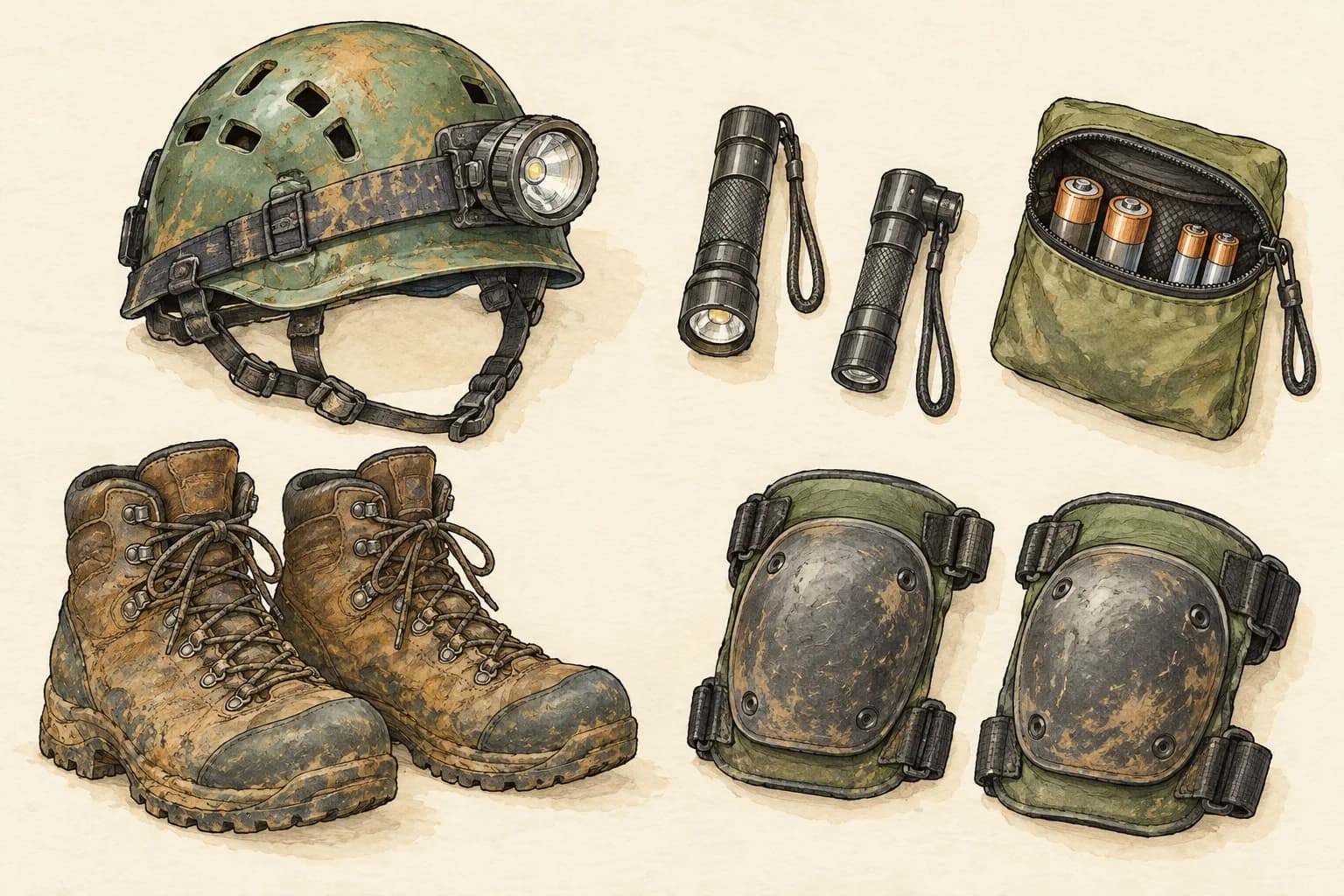
Caves are fragile and disorienting. Our youth group enters caves only on leader-planned trips with qualified cave leaders. Never explore on your own.
Before you begin
Bring along
- Helmet
- Three independent lights
- Guide's equipment list
Support & boundaries
Use a qualified instructor or guide and the program's approved supervision plan. This lesson is preparation, not permission or certification for an activity.
01 / Learn
Understand the skill
- Three independent light sources per person — helmet-mounted primary plus two backups.
- Helmet always; knee pads often; no loose scarves or dangling strings.
- Never go alone; minimum team size and turnaround times are set by leaders.
- Cave conservation: do not touch formations, stay on marked routes, pack out all trash.
- White-nose syndrome kills bats — follow decontamination steps leaders provide between sites and gear.
02 / Practice
Try it, step by step
- 1
Complete leader-led cave orientation before any trip.
- 2
Test all lights before entry; spare batteries in dry bag.
- 3
Move slowly; three points of contact on slippery rock.
- 4
If light fails, stop and fix — do not proceed in darkness.
- 5
Decontaminate boots and gear per leader checklist after exit.
Common mistakes to avoid
- Enter with two because the trip seems short.
- Treating a successful practice attempt as permission to skip the supervision or checks for a real task.
Your call
One of your three lights fails before entry. What next?
03 / Demonstrate
Show what you can do
Use these prompts with a mentor. This practice checklist resets when you leave; record your overall stage below in the signed-in manual.
0 of 3 reviewed together
Mentor notes & sources
Help someone learn
- Verify every member’s lights and helmets at cave mouth.
- Assign experienced adult at front and rear; youth in middle.
- Stop for hypothermia signs — caves stay cool year-round.
- Log training dates for members allowed on vertical or tight passages.
Start together, then let the learner take responsibility at an appropriate level. Offer a shorter task, a different role, or more practice time when useful. Review the demonstration criteria together; advanced practice never removes supervision requirements.
Reference shelf
Original program lessons informed by these references. Equipment manuals, current local rules, and qualified instruction govern technical practice.
- National Speleological Society: responsible caving ↗
Equipment, cave conservation and qualified trip preparation
Edition updated 2026-09-28. Program learning material; not a professional qualification.
04 / Apply · In Action
Three working lights
Before an approved guided trip, test your helmet light and two independent backups, then review access, weather, and conservation rules.
What success looks like
Show three working lights and explain why a failed check can stop the trip.
Talk it through
What would you do if your primary light failed underground?
05 / Teach · Take it further
Help a qualified leader perform the pre-entry equipment count.