Whitewater basics and rafting safety
Outfitter trips, helmets, commands, and swim position.
Skill 3.24 · About 25 minutes to begin
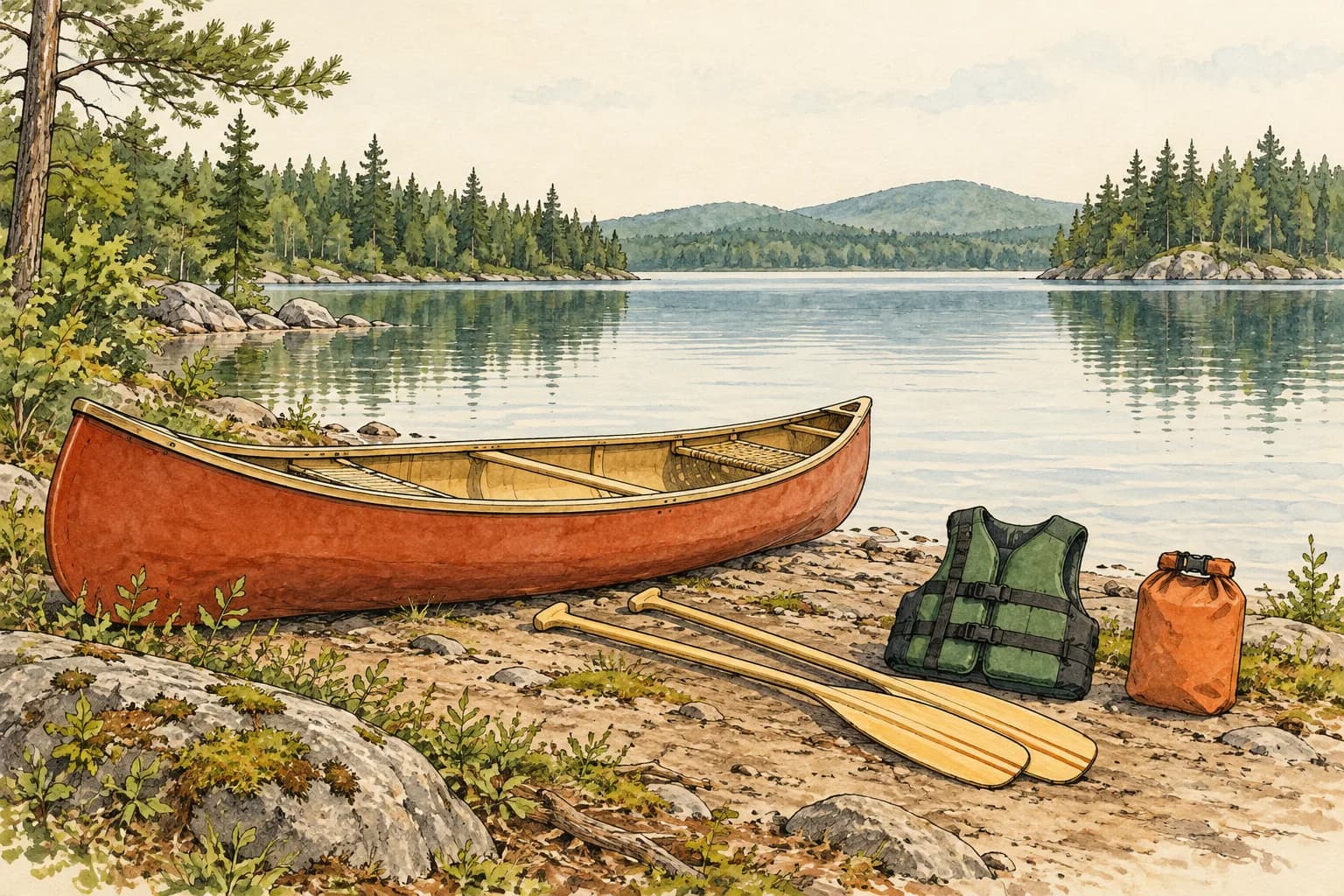
Ocoee River and similar trips use licensed outfitters and guides. Your job is listen, paddle, and stay in the boat unless told otherwise.
Before you begin
Bring along
- Instructor-approved life jacket
- Trip equipment list
Support & boundaries
Use a qualified instructor or guide and the program's approved supervision plan. This lesson is preparation, not permission or certification for an activity.
01 / Learn
Understand the skill
- Commercial rafting follows guide commands — high side, lean in, paddle forward.
- Helmets and PFDs are required — outfitter fits them.
- If you swim, feet up, face up, toes not touching bottom in moving water — guides train this.
- Hold paddle properly — never swing at others.
- Trip timing is seasonal — leaders book windows when water and staffing are safe.
02 / Practice
Try it, step by step
- 1
Listen to guide safety talk without talking over it.
- 2
Practice sitting brace in calm eddy if guide offers.
- 3
Secure glasses with strap; leave non-essential electronics ashore.
- 4
Paddle in sync with crew on commands.
- 5
Thank outfitter staff — they manage real risk.
Common mistakes to avoid
- Wait and copy the others during a rapid.
- Treating a successful practice attempt as permission to skip the supervision or checks for a real task.
Your call
You do not understand a guide's safety command. What next?
03 / Demonstrate
Show what you can do
Use these prompts with a mentor. This practice checklist resets when you leave; record your overall stage below in the signed-in manual.
0 of 3 reviewed together
Mentor notes & sources
Help someone learn
- Confirm headcount on bus and at put-in twice.
- Pair nervous members with calm partners in same raft if guides allow seating input.
- Debrief feelings after rapids — normalize fear, praise listening.
Start together, then let the learner take responsibility at an appropriate level. Offer a shorter task, a different role, or more practice time when useful. Review the demonstration criteria together; advanced practice never removes supervision requirements.
Reference shelf
Original program lessons informed by these references. Equipment manuals, current local rules, and qualified instruction govern technical practice.
- US Coast Guard: wearing your life jacket ↗
Life-jacket use and fit
Edition updated 2026-09-28. Program learning material; not a professional qualification.
04 / Apply · In Action
Listen before the launch
At a qualified outfitter briefing, learn the trip's commands, equipment checks, and guide-directed emergency actions.
What success looks like
Repeat the guide's instructions accurately and explain whom you follow on the water.
Talk it through
Which command did you need clarified?
05 / Teach · Take it further
Help your crew arrive prepared and attentive for the briefing.