Clothing and layering
Dress for sweat, wind, rain, and cold — especially in North Georgia hills.
Skill 3.3 · About 25 minutes to begin
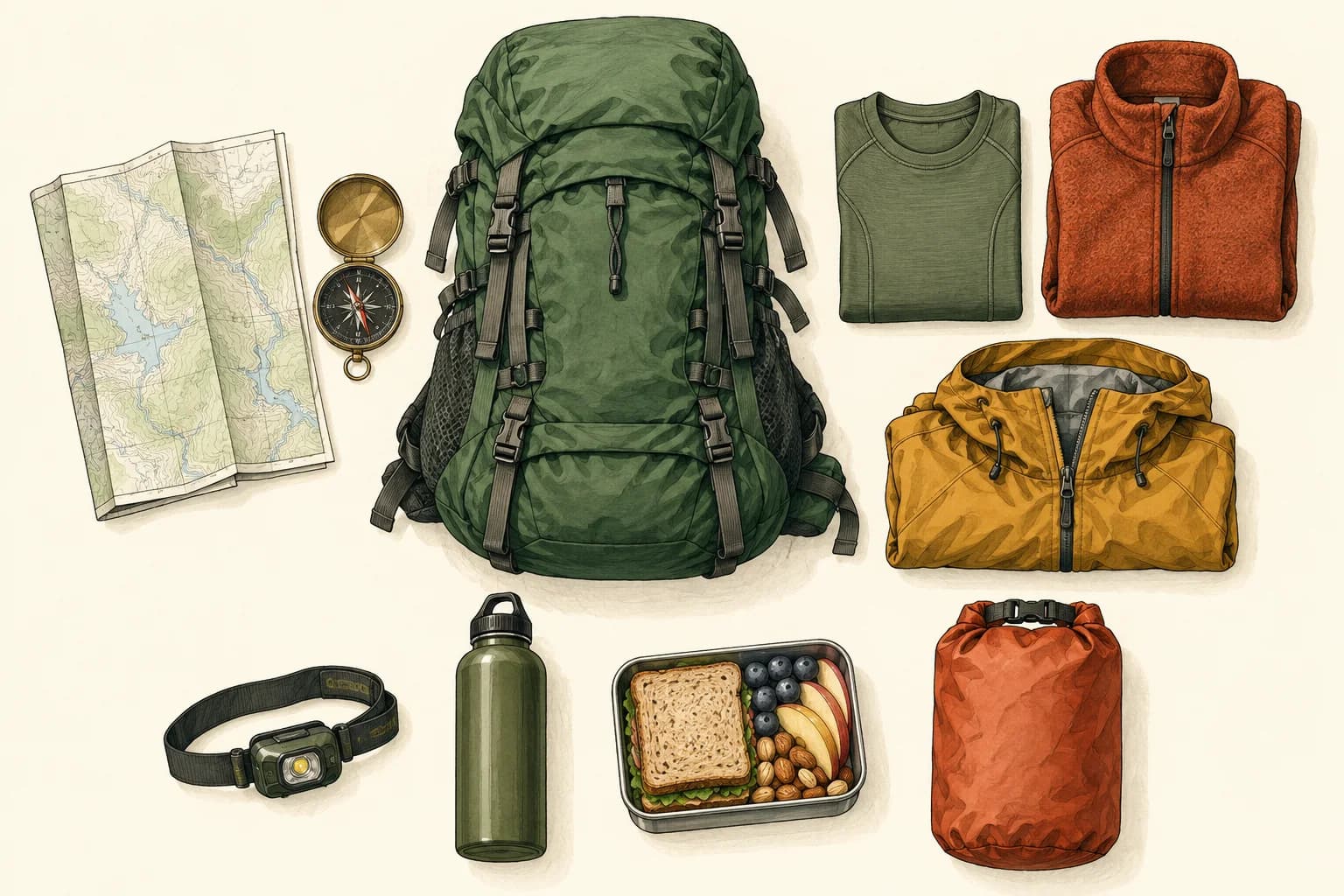
Weather in the mountains changes fast. Layering lets you cool off on climbs and warm up at camp without soaking your clothes in sweat.
Before you begin
Bring along
- Trip plan
- Packing list
- Your outing equipment
Support & boundaries
Choose an age-appropriate task with your leader or trusted adult. Outdoor practice follows the approved route, buddy, and supervision plan; adapt the challenge to your abilities.
01 / Learn
Understand the skill
- Base layer moves moisture (synthetic or wool — avoid cotton for active wear).
- Mid layer traps warmth (fleece or light puffy).
- Shell blocks wind and rain (breathable rain jacket).
- One warm hat and light gloves weigh little and help a lot at night.
- Wet cotton steals body heat — change into dry clothes before evening chill.
Explore the idea
Three jobs for your layers
The layer near your skin should help manage perspiration. Adjust your pace and clothing before you become soaked with sweat.
02 / Practice
Try it, step by step
- 1
Wear your trail clothes on a practice walk; adjust before trip day.
- 2
Pack an extra dry shirt and socks in a zip bag.
- 3
Learn to strip a layer before you start sweating hard uphill.
- 4
Bring sun hat and sunscreen even on cloudy days.
- 5
Break in boots or trail shoes weeks ahead — not on a long hike.
Common mistakes to avoid
- Keep every layer on until you are soaked.
- Treating a successful practice attempt as permission to skip the supervision or checks for a real task.
Your call
You are sweating on a climb before a cold stop. What helps?
03 / Demonstrate
Show what you can do
Use these prompts with a mentor. This practice checklist resets when you leave; record your overall stage below in the signed-in manual.
0 of 3 reviewed together
Mentor notes & sources
Help someone learn
- Demonstrate layering at a meeting with real jackets, not just slides.
- Call a clothing check at the trailhead — polite but firm.
- Pair experienced hikers with newer members to review layers quietly.
Start together, then let the learner take responsibility at an appropriate level. Offer a shorter task, a different role, or more practice time when useful. Review the demonstration criteria together; advanced practice never removes supervision requirements.
Reference shelf
Original program lessons informed by these references. Equipment manuals, current local rules, and qualified instruction govern technical practice.
- NOLS: expedition learning ↗
Outdoor learning, teamwork and reflection
Edition updated 2026-09-28. Program learning material; not a professional qualification.
04 / Apply · In Action
Dress for a changing day
Choose layers for a cool start, warm climb, and rainy rest stop. Explain when you would add or remove each.
What success looks like
Demonstrate a dry backup system and adjust layers before becoming chilled or overheated.
Talk it through
Which layer would you need first at a windy stop?
05 / Teach · Take it further
Teach your partner using three different forecast cards.