Gear basics
Core equipment for day hikes, overnights, and travel days.
Skill 3.2 · About 25 minutes to begin
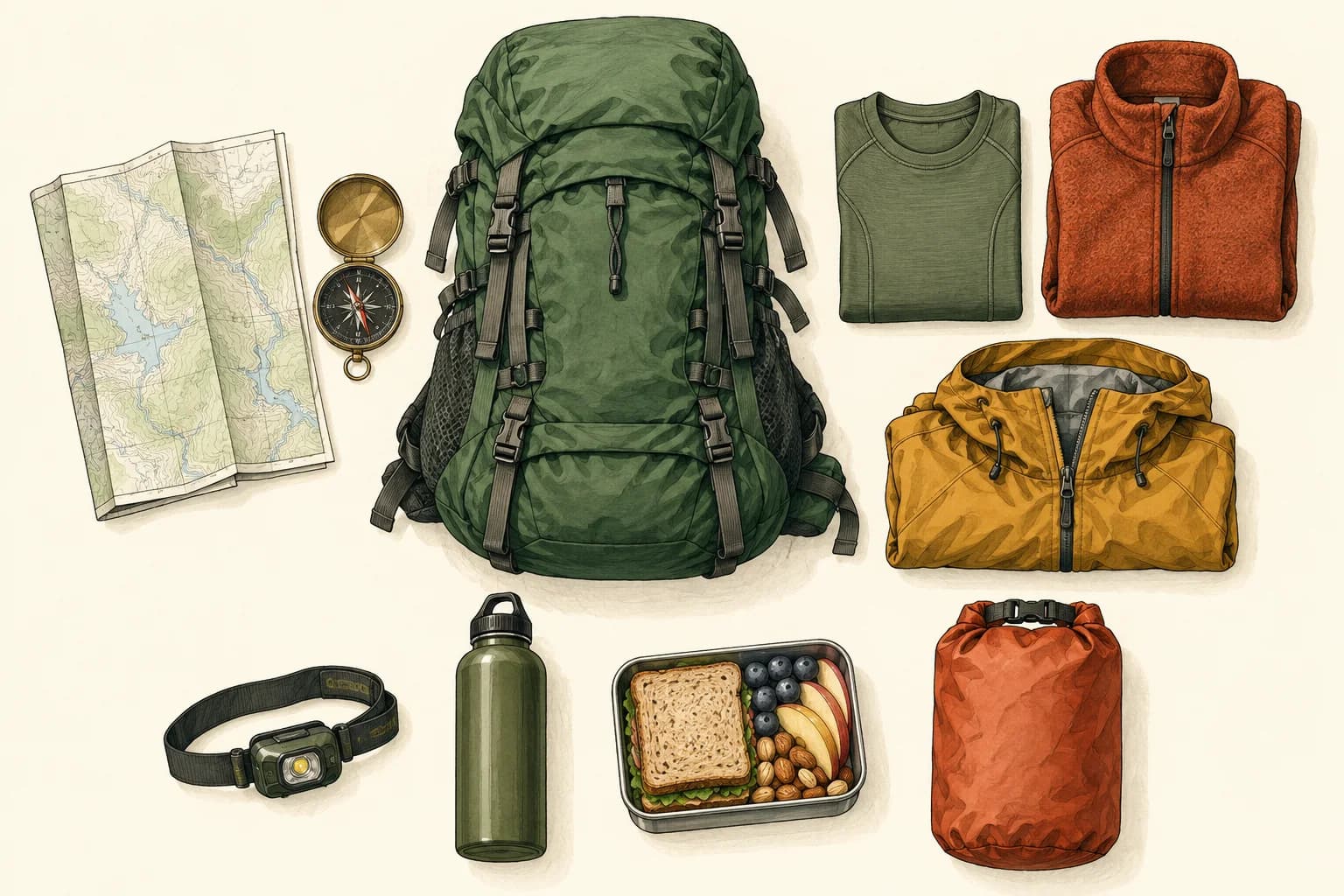
Gear does not need to be expensive, but it must fit, work, and be appropriate for the activity. Test new gear at home or on a short practice outing first.
Before you begin
Bring along
- Trip plan
- Packing list
- Your outing equipment
Support & boundaries
Choose an age-appropriate task with your leader or trusted adult. Outdoor practice follows the approved route, buddy, and supervision plan; adapt the challenge to your abilities.
01 / Learn
Understand the skill
- The ten essentials mindset: navigation, sun protection, insulation, illumination, first-aid supplies, fire starter, repair kit, nutrition, hydration, emergency shelter — adapted to the trip.
- Borrowed gear must be returned clean and dry; report damage immediately.
- Sharp tools (knives, axes) stay with adults or trained youth under direct supervision.
- Group gear (tents, stoves, ropes) is shared property — treat it better than your own.
Explore the idea
Explore a packed bag
Keep items you may need during the day easy to reach: rain protection, a light, snacks, and your navigation tools. Your trip list determines the actual contents.
02 / Practice
Try it, step by step
- 1
Lay out gear on a tarp at home; eliminate duplicates your team does not need.
- 2
Label your bag and water bottles with your name.
- 3
Practice setting up tent and stove before a big trip.
- 4
Pack rain cover for pack and a dry bag for sleep clothes.
- 5
Weigh your pack; ask a leader if you are unsure about weight for the route.
Watch & try
See it demonstrated
REI
How to pack a backpack
Notice how weight and quick-access items are placed, then test your own pack.
Watch on YouTube ↗Common mistakes to avoid
- Pack it and hope it works.
- Treating a successful practice attempt as permission to skip the supervision or checks for a real task.
Your call
Borrowed equipment has a broken fastener. What next?
03 / Demonstrate
Show what you can do
Use these prompts with a mentor. This practice checklist resets when you leave; record your overall stage below in the signed-in manual.
0 of 3 reviewed together
Mentor notes & sources
Help someone learn
- Run a gear swap table so newer members see good budget options.
- Teach the difference between cotton and synthetic for active layers.
- Keep a shared checklist photo in the group chat for each trip type.
Start together, then let the learner take responsibility at an appropriate level. Offer a shorter task, a different role, or more practice time when useful. Review the demonstration criteria together; advanced practice never removes supervision requirements.
Reference shelf
Original program lessons informed by these references. Equipment manuals, current local rules, and qualified instruction govern technical practice.
- NOLS: expedition learning ↗
Outdoor learning, teamwork and reflection
Edition updated 2026-09-28. Program learning material; not a professional qualification.
04 / Apply · In Action
Borrow, inspect, prepare
Lay out the equipment for a planned outing and inspect borrowed items with the owner.
What success looks like
Identify an essential item, an optional item, and a defect that needs attention.
Talk it through
What could you borrow instead of buy?
05 / Teach · Take it further
Help a newer member choose suitable gear without pushing expensive options.