Trip planning
Goals, permissions, schedules, and backup plans before you leave town.
Skill 3.1 · About 25 minutes to begin
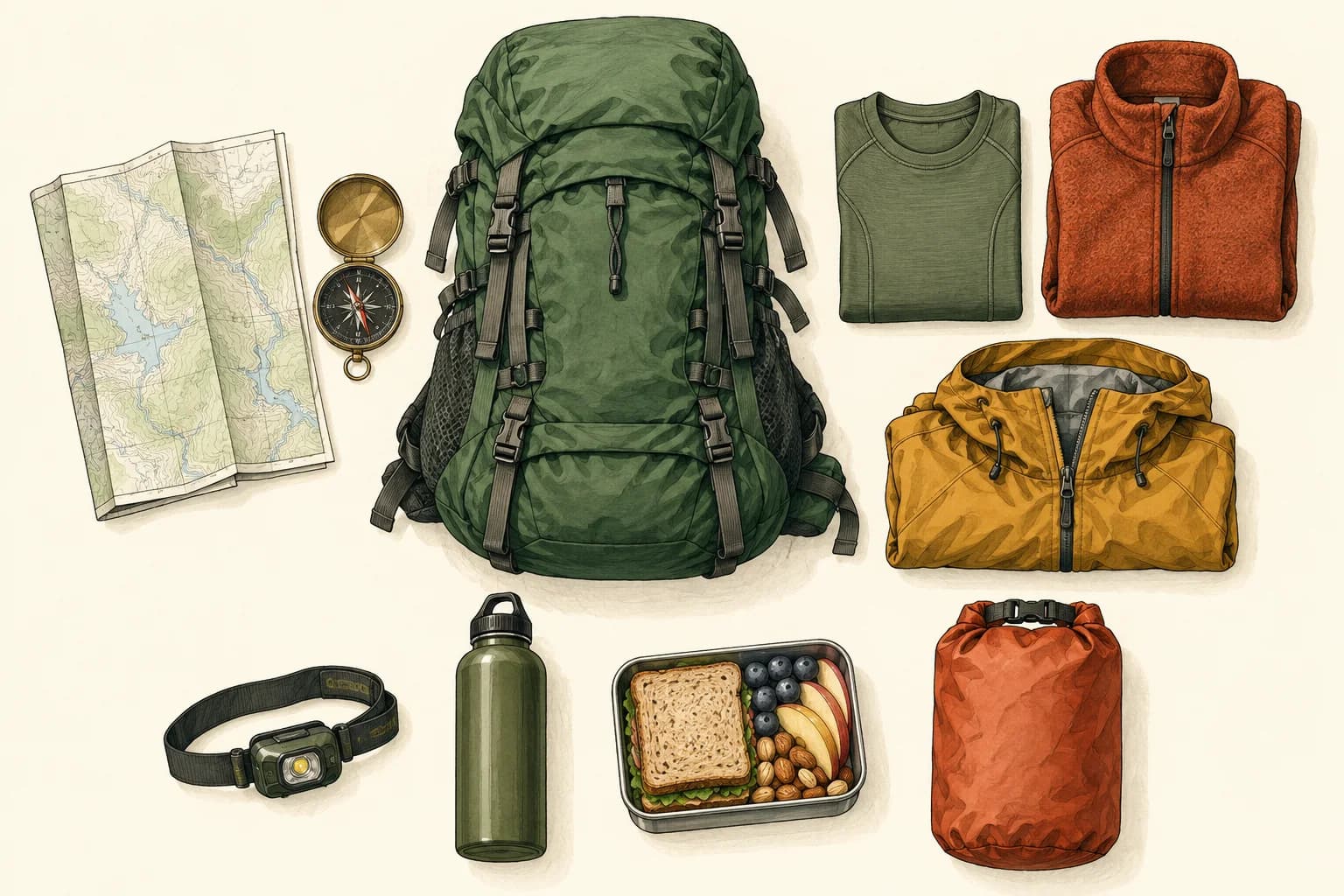
Good trips start at the kitchen table, not on the trailhead. Planning keeps the group safe, on time, and ready for weather or surprises.
Before you begin
Bring along
- Trip plan
- Packing list
- Your outing equipment
Support & boundaries
Choose an age-appropriate task with your leader or trusted adult. Outdoor practice follows the approved route, buddy, and supervision plan; adapt the challenge to your abilities.
01 / Learn
Understand the skill
- Every outing needs a written plan: where you are going, who is coming, how long you will be gone, and how adults will stay in contact.
- Match the trip to the group’s abilities and experience; choose a pace and plan everyone can sustain safely.
- Check land manager rules for the area (permits, group size, fire restrictions, cave closures). Leaders hold the official permits.
- Build in turnaround times: if you are not at a checkpoint by a set time, you change plans — do not push into darkness or storms.
- Share the plan with parents and the adult leader team before departure.
02 / Practice
Try it, step by step
- 1
List the trip purpose (training hike, service camp, river day) and three learning goals.
- 2
Draft a simple timeline: meet, travel, on-trail hours, meals, sleep, return.
- 3
Identify risks (heat, cold water, cliffs, traffic) and one mitigation for each.
- 4
Pack a contact card: leader phones, meeting point, and emergency meet-up location.
- 5
Run a five-minute gear check with your crew the night before.
Common mistakes to avoid
- Assume the crew will move faster.
- Treating a successful practice attempt as permission to skip the supervision or checks for a real task.
Your call
Your route estimate leaves no time for delays. What should change?
03 / Demonstrate
Show what you can do
Use these prompts with a mentor. This practice checklist resets when you leave; record your overall stage below in the signed-in manual.
0 of 3 reviewed together
Mentor notes & sources
Help someone learn
- Assign roles early: navigator, first-aid kit, water filter, camp setup lead.
- Use a whiteboard or shared doc so everyone sees the same plan.
- Ask quieter members what they are worried about — address it before the van leaves.
- Debrief within 48 hours: what worked, what to change next trip.
Start together, then let the learner take responsibility at an appropriate level. Offer a shorter task, a different role, or more practice time when useful. Review the demonstration criteria together; advanced practice never removes supervision requirements.
Reference shelf
Original program lessons informed by these references. Equipment manuals, current local rules, and qualified instruction govern technical practice.
- NOLS: expedition learning ↗
Outdoor learning, teamwork and reflection
Edition updated 2026-09-28. Program learning material; not a professional qualification.
04 / Apply · In Action
Build a usable trip brief
Plan an approved day hike with route, timing, transport, equipment, weather check, and emergency contacts kept privately.
What success looks like
A partner can explain the route and turnaround plan from your brief.
Talk it through
Which assumption did you have to verify?
05 / Teach · Take it further
Present two route options and explain the tradeoffs to the crew.