First aid kit and common injuries
Blisters, sprains, cuts, and when to stop and treat.
Skill 3.20 · About 25 minutes to begin
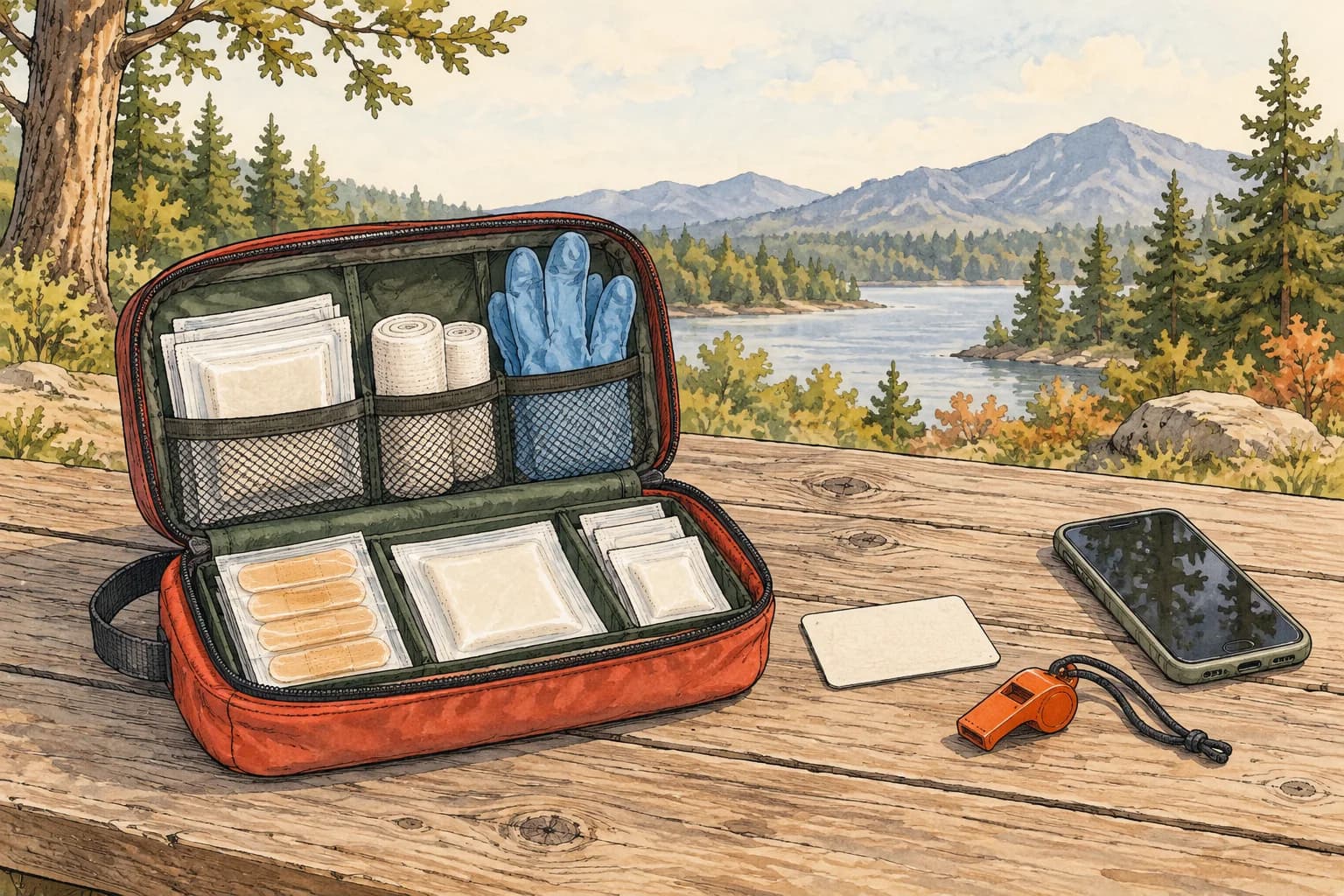
You are not a medic — you stabilize, comfort, and get adult help. Leaders hold training and authority.
Before you begin
Bring along
- Group first-aid kit
- Clean practice supplies
- Emergency plan
Support & boundaries
Practice with a trained adult. For a real emergency, get emergency help and give only care within your training. This lesson does not replace first-aid certification.
01 / Learn
Understand the skill
- Group kits stay stocked — report used items after every trip.
- Clean small cuts with safe water; cover with bandage.
- Stop activity after a suspected sprain or fracture and get trained adult help; do not force movement or attempt to straighten an injured limb.
- Do not move someone with neck or back pain unless immediate danger — call for help.
- Know where epinephrine and inhalers are for members who need them — do not share meds.
02 / Practice
Try it, step by step
- 1
Locate the group first-aid kit before each outing.
- 2
Practice blister tape on a practice foot at a meeting.
- 3
Carry personal meds in original labeled containers.
- 4
Write incident notes for leaders after any treatment.
- 5
Replace gloves and gauze you use.
Common mistakes to avoid
- Rush in without checking hazards.
- Treating a successful practice attempt as permission to skip the supervision or checks for a real task.
Your call
Someone is injured in an unsafe area. What comes first?
03 / Demonstrate
Show what you can do
Use these prompts with a mentor. This practice checklist resets when you leave; record your overall stage below in the signed-in manual.
0 of 3 reviewed together
Mentor notes & sources
Help someone learn
- Assign a first-aid kit carrier each trip.
- Run a scenario: ankle twist at mile two — who does what?
- Check kit expiration dates quarterly.
Start together, then let the learner take responsibility at an appropriate level. Offer a shorter task, a different role, or more practice time when useful. Review the demonstration criteria together; advanced practice never removes supervision requirements.
Reference shelf
Original program lessons informed by these references. Equipment manuals, current local rules, and qualified instruction govern technical practice.
- American Red Cross: first aid steps ↗
Recognizing emergencies and getting trained help
Edition updated 2026-09-28. Program learning material; not a professional qualification.
04 / Apply · In Action
Find the kit, get help
With a trained adult, locate supplies and role-play responding to a minor injury using clean practice materials.
What success looks like
Check scene safety, get appropriate help, and demonstrate only care within your training.
Talk it through
What would make this an emergency instead of a minor problem?
05 / Teach · Take it further
Help restock the kit and arrange a recognized first-aid course.