Emergencies and communication
911, location, signals, and staying calm.
Skill 3.21 · About 25 minutes to begin
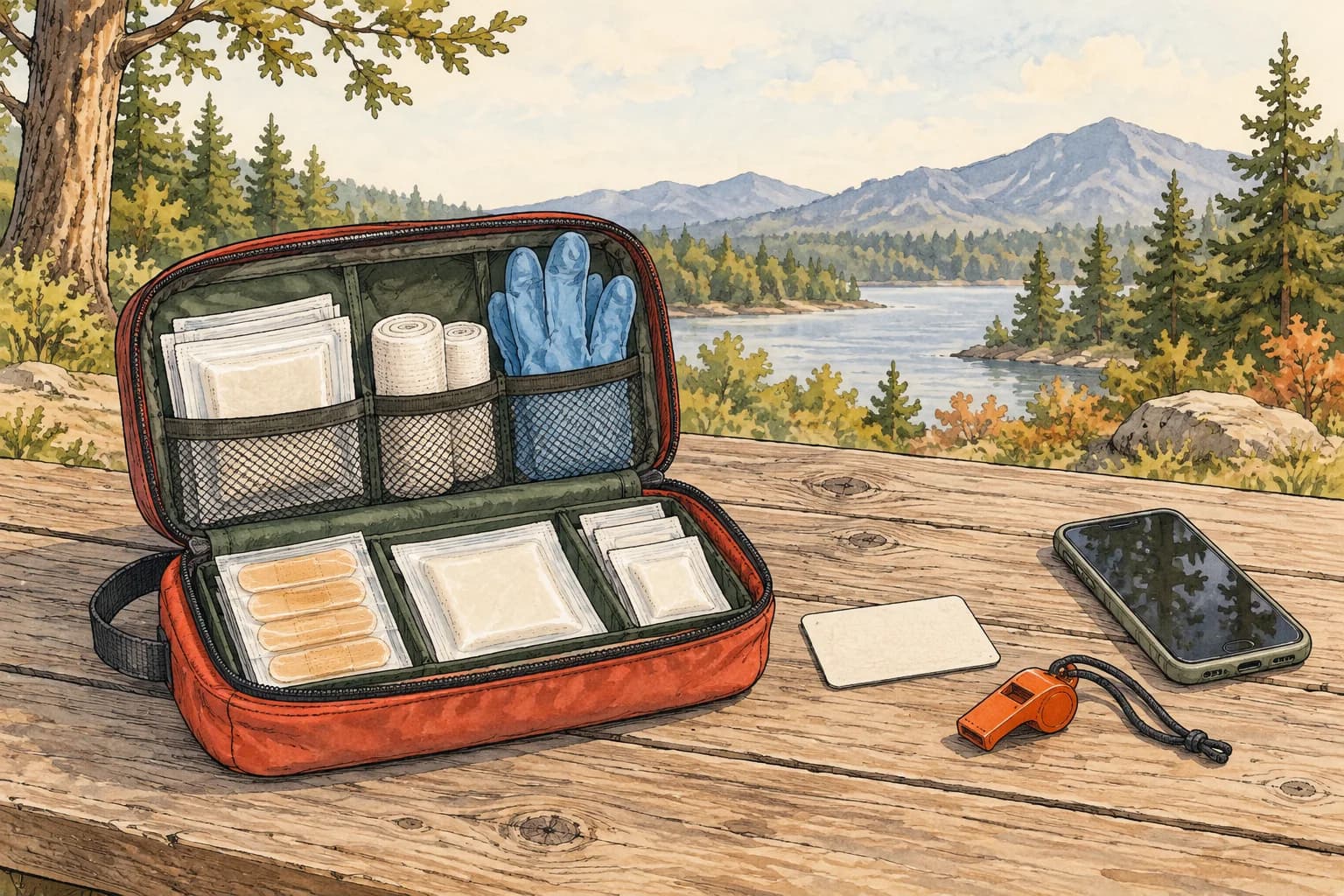
Emergencies are rare when we plan well. Rehearse so panic does not waste minutes.
Before you begin
Bring along
- Group first-aid kit
- Clean practice supplies
- Emergency plan
Support & boundaries
Practice with a trained adult. For a real emergency, get emergency help and give only care within your training. This lesson does not replace first-aid certification.
01 / Learn
Understand the skill
- Call 911 promptly for a life-threatening emergency. For a missing person, notify leaders immediately and contact emergency services promptly when safety is in doubt; do not delay for an improvised search.
- Give dispatch your best location: trail name, GPS coords, landmarks, and callback number.
- Satellite messengers or radios may be on trip — leaders assign who carries them.
- One person stays with the injured; others note time and conditions.
- Parent and leader contact list is in the trip plan — leaders fill exact numbers.
02 / Practice
Try it, step by step
- 1
Practice saying your location out loud using map and phone coords.
- 2
Learn whistle and hand signals used by your crew.
- 3
If separated, STOP and wait unless leaders taught otherwise for that terrain.
- 4
Follow the adult-coordinated emergency plan. Do not send youth alone for help or split the group without supervision and a clear plan.
- 5
After incident, participate in debrief without blame focus.
Common mistakes to avoid
- Send a youth alone to search for reception.
- Treating a successful practice attempt as permission to skip the supervision or checks for a real task.
Your call
There is no phone signal during an emergency. What next?
03 / Demonstrate
Show what you can do
Use these prompts with a mentor. This practice checklist resets when you leave; record your overall stage below in the signed-in manual.
0 of 3 reviewed together
Mentor notes & sources
Help someone learn
- Review emergency card at trailhead.
- Designate communicator role before hike starts.
- Run a table-top drill: lightning on an open ridge.
Start together, then let the learner take responsibility at an appropriate level. Offer a shorter task, a different role, or more practice time when useful. Review the demonstration criteria together; advanced practice never removes supervision requirements.
Reference shelf
Original program lessons informed by these references. Equipment manuals, current local rules, and qualified instruction govern technical practice.
- American Red Cross: first aid steps ↗
Recognizing emergencies and getting trained help
Edition updated 2026-09-28. Program learning material; not a professional qualification.
04 / Apply · In Action
A practice call
Without calling a real emergency number, rehearse a report: location, what happened, hazards, people affected, and callback details.
What success looks like
A mentor can repeat your location and the help you are requesting.
Talk it through
What information was hard to find quickly?
05 / Teach · Take it further
Help the crew run a tabletop scenario with a communications failure.