Respect, consent, and boundaries
Ask clearly, accept a no, and speak up when someone feels unsafe.
Skill 6.3 · About 25 minutes to begin
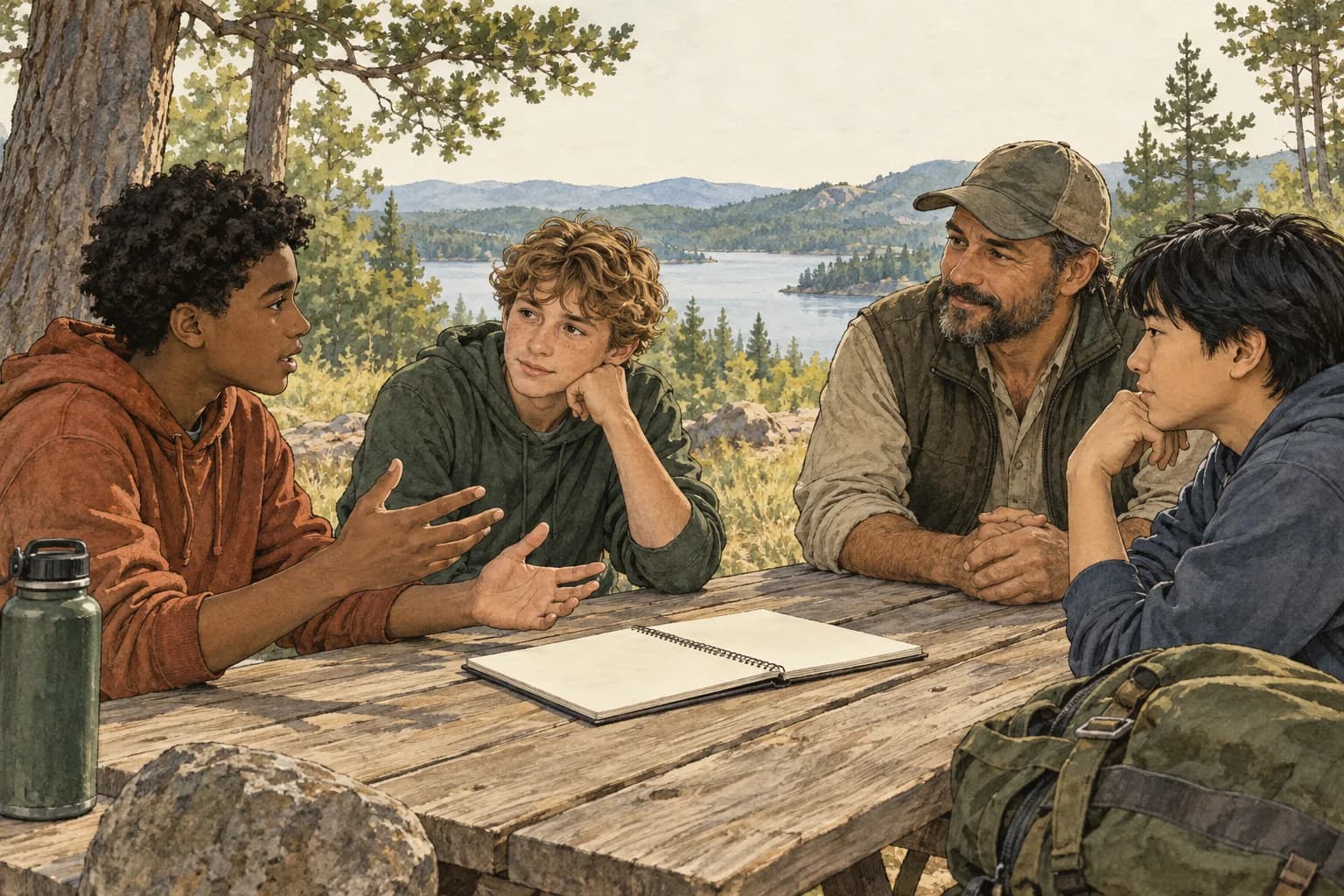
Respect shows in everyday choices: asking before borrowing equipment, taking a photo, sharing a story, or touching someone. The same care belongs in friendships and dating.
Before you begin
Bring along
- Fictional scenario cards
- Practice partner
Support & boundaries
Use fictional situations and choose what you share. You may pass or speak privately with a trusted adult. Unsafe behavior or a serious concern needs adult support.
01 / Learn
Understand the skill
- Consent must be freely given and specific; silence or pressure does not make an agreement.
- Someone can change their mind. A previous yes is not permission for a different situation.
- You may leave an uncomfortable interaction and talk to a trusted adult. Keep asking for help if the first person does not respond.
02 / Practice
Try it, step by step
- 1
Practice asking permission in a simple scenario, such as borrowing a jacket or posting a group photo.
- 2
Practice accepting no with a brief, respectful response and no argument.
- 3
State a boundary clearly: Please stop. I do not want that shared.
- 4
If a boundary is ignored, move to a safer setting and involve a trusted adult. For immediate danger, contact emergency services.
- 5
Discuss how to support a friend without pressuring them to tell the group private details.
Common mistakes to avoid
- Post it because they agreed to the photograph.
- Treating a successful practice attempt as permission to skip the supervision or checks for a real task.
Your call
A friend agreed to a photo but says not to post it. What next?
03 / Demonstrate
Show what you can do
Use these prompts with a mentor. This practice checklist resets when you leave; record your overall stage below in the signed-in manual.
0 of 3 reviewed together
Mentor notes & sources
Help someone learn
- Keep practice age-appropriate, fictional, and optional to speak in.
- Follow the program's safeguarding procedures for disclosures; do not promise secrecy or investigate personally.
Start together, then let the learner take responsibility at an appropriate level. Offer a shorter task, a different role, or more practice time when useful. Review the demonstration criteria together; advanced practice never removes supervision requirements.
Reference shelf
Original program lessons informed by these references. Equipment manuals, current local rules, and qualified instruction govern technical practice.
- Search Institute: developmental relationships ↗
Care, support, challenge and youth agency
Edition updated 2026-09-28. Program learning material; not a professional qualification.
04 / Apply · In Action
Ask and accept the answer
Practice three fictional requests: borrowing an item, taking a photograph, and posting it. Include a no and a changed mind.
What success looks like
Ask clearly, accept the answer without pressure, and name how to get help if a boundary is ignored.
Talk it through
Why is a previous yes not permission for everything?
05 / Teach · Take it further
Help your crew agree on a photo-sharing rule that respects everyone's choice.