Being useful in your community
Understand a local need and contribute with the people affected.
Skill 7.7 · About 90 minutes to begin
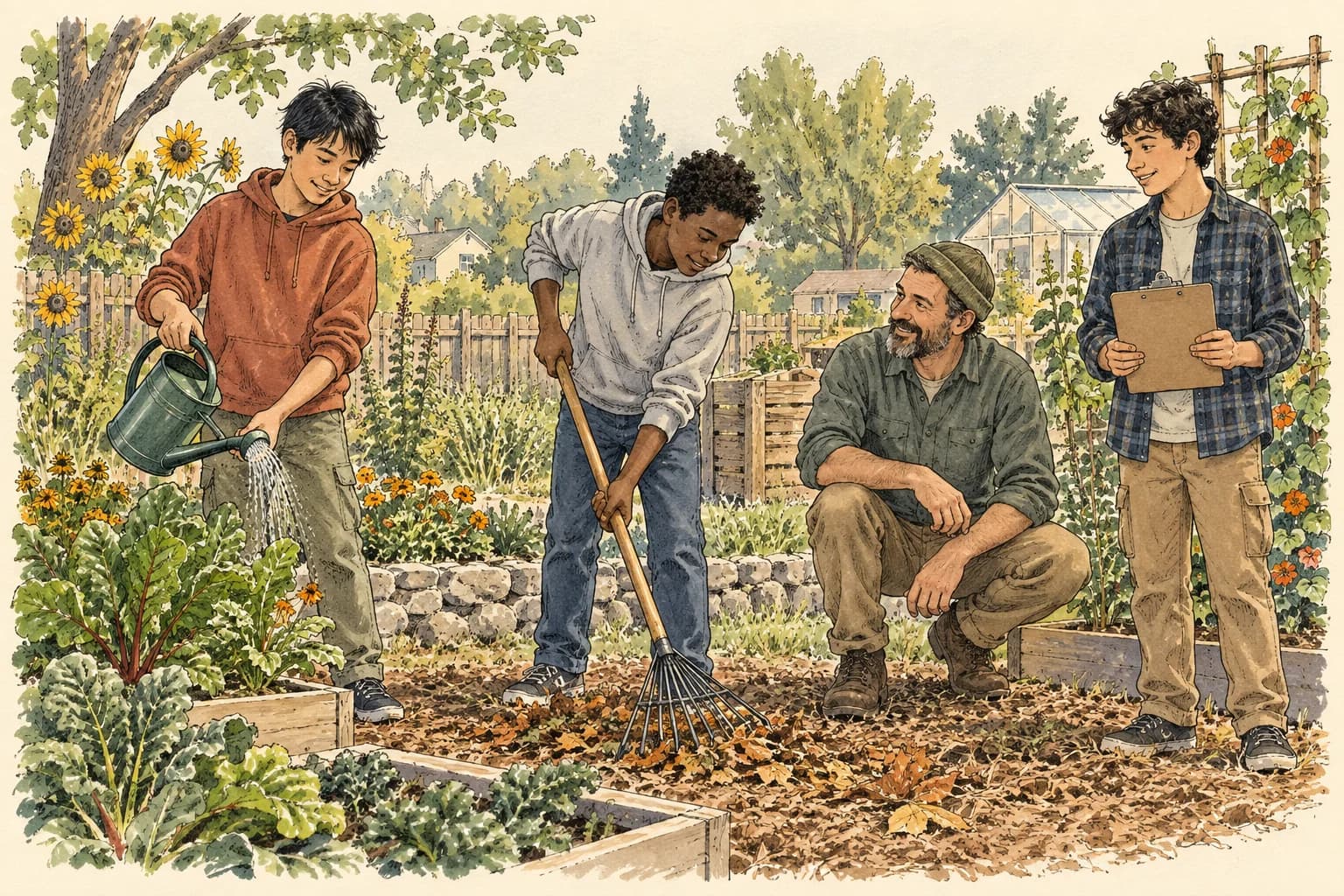
Good service starts by listening. A project should be useful to the people receiving it, fit the group's abilities, and leave responsibility clear when the work is finished.
Before you begin
Bring along
- Project plan
- Approved community contact
Support & boundaries
Choose an age-appropriate task with your leader or trusted adult. Outdoor practice follows the approved route, buddy, and supervision plan; adapt the challenge to your abilities.
01 / Learn
Understand the skill
- Ask people what they need before deciding what help should look like.
- Public spaces, organizations, and private property may need permission for a project.
- Represent the program respectfully and protect the privacy of the people you serve.
Explore the idea
A clear task handoff
Explain the result, each person's role, the boundaries, and the stop conditions. Ask people to explain their task back.
02 / Practice
Try it, step by step
- 1
Identify one local need through a conversation with an adult-approved community contact.
- 2
Write who benefits, what they requested, and what permission is needed.
- 3
Plan a small project with roles, supplies, supervision, accessibility, and a cleanup plan.
- 4
Complete the agreed work and ask the recipient whether it met the need.
- 5
Thank everyone involved and share a factual, privacy-respecting account of what you learned.
Common mistakes to avoid
- Buy supplies and surprise them.
- Treating a successful practice attempt as permission to skip the supervision or checks for a real task.
Your call
You have a service idea but have not asked the recipient. What next?
03 / Demonstrate
Show what you can do
Use these prompts with a mentor. This practice checklist resets when you leave; record your overall stage below in the signed-in manual.
0 of 3 reviewed together
Mentor notes & sources
Help someone learn
- Give youth real planning responsibilities with adult oversight.
- Measure usefulness by the recipient's feedback, not just hours or photographs.
Start together, then let the learner take responsibility at an appropriate level. Offer a shorter task, a different role, or more practice time when useful. Review the demonstration criteria together; advanced practice never removes supervision requirements.
Reference shelf
Original program lessons informed by these references. Equipment manuals, current local rules, and qualified instruction govern technical practice.
- Scouting America: aims and methods ↗
Progression, service and youth leadership
- Search Institute: developmental relationships ↗
Care, support, challenge and youth agency
Edition updated 2026-09-28. Program learning material; not a professional qualification.
04 / Apply · In Action
Ask what would help
With adult support, speak with a community contact, agree on a small useful project, and follow through.
What success looks like
Show the agreed need, permissions, plan, and recipient feedback without private details.
Talk it through
How did listening change your original idea?
05 / Teach · Take it further
Help a newer member take responsibility for the next project.