Teaching a skill
Demonstrate, practice, review — the teaching loop.
Skill 7.6 · About 25 minutes to begin
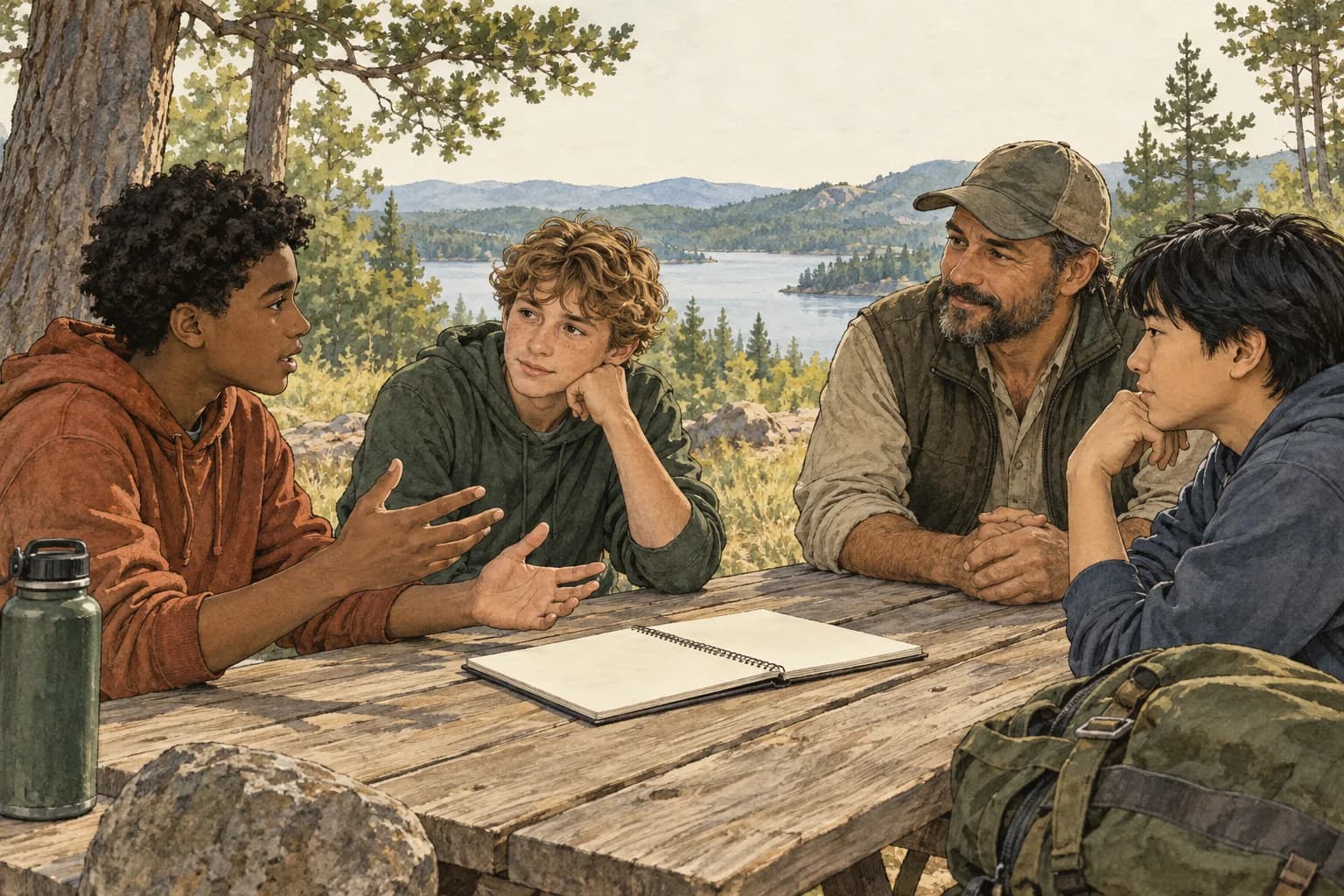
Teaching reinforces your own skills. Go slow, let others try, and fix one thing at a time.
Before you begin
Bring along
- Task plan
- Role cards
- Practice crew
Support & boundaries
Choose an age-appropriate task with your leader or trusted adult. Outdoor practice follows the approved route, buddy, and supervision plan; adapt the challenge to your abilities.
01 / Learn
Understand the skill
- Tell, show, do, review — four steps keep lessons short.
- One main skill per session (one knot, one map skill).
- Safety stops the lesson if gear or weather is wrong.
- Praise effort; correct technique without insults.
- Some skills (scuba, caves, whitewater) are instructor-only — know the line.
Explore the idea
A clear task handoff
Explain the result, each person's role, the boundaries, and the stop conditions. Ask people to explain their task back.
02 / Practice
Try it, step by step
- 1
Prepare materials the night before.
- 2
Demonstrate twice — once slow, once normal speed.
- 3
Let each person try while others watch one correction at a time.
- 4
End with checkoff items from this guide.
- 5
Ask adult leader to add anything you missed.
Common mistakes to avoid
- Take over and finish the task for them.
- Treating a successful practice attempt as permission to skip the supervision or checks for a real task.
Your call
A learner makes a harmless mistake during practice. What next?
03 / Demonstrate
Show what you can do
Use these prompts with a mentor. This practice checklist resets when you leave; record your overall stage below in the signed-in manual.
0 of 3 reviewed together
Mentor notes & sources
Help someone learn
- Assign teaching slots in monthly meetings.
- Video record demos only if parents consented for media policy.
- Pair teacher with assistant who watches time and safety.
Start together, then let the learner take responsibility at an appropriate level. Offer a shorter task, a different role, or more practice time when useful. Review the demonstration criteria together; advanced practice never removes supervision requirements.
Reference shelf
Original program lessons informed by these references. Equipment manuals, current local rules, and qualified instruction govern technical practice.
- NOLS: expedition learning ↗
Outdoor learning, teamwork and reflection
- Search Institute: developmental relationships ↗
Care, support, challenge and youth agency
Edition updated 2026-09-28. Program learning material; not a professional qualification.
04 / Apply · In Action
Teach one useful thing
Choose a low-risk skill you can demonstrate correctly. Explain it, show it slowly, guide practice, and let the learner try.
What success looks like
The learner demonstrates the skill and can explain a common mistake.
Talk it through
What did you change when your first explanation did not work?
05 / Teach · Take it further
Invite the learner to teach it back to you.