Talking to neighbors and door etiquette
Polite sign-ups, safety, and representing the youth group well.
Skill 7.3 · About 25 minutes to begin
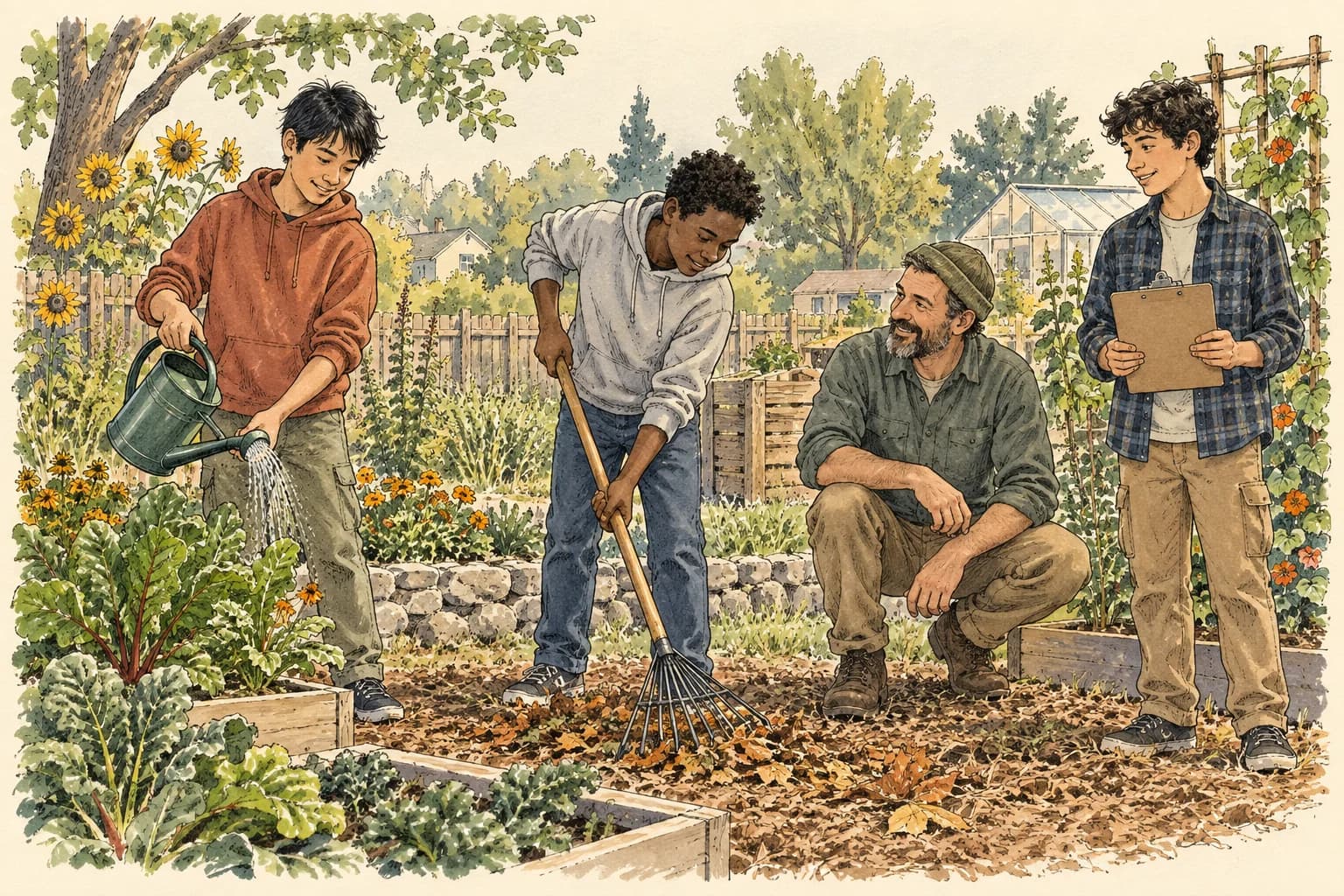
You are the face of the program on door routes. Courtesy opens doors; pushiness closes them.
Before you begin
Bring along
- Approved work order
- Youth role checklist
- Water and appropriate clothing
Support & boundaries
Adult-led program activity with approved youth roles. Adults alone operate, load, and haul aerators and drive vehicles. Stay out of homes and clear of moving equipment.
01 / Learn
Understand the skill
- Travel in pairs with adult leader nearby on knocking days.
- Identify yourself by name and youth group; mention adult leader if asked.
- No entering homes; stay on porch or driveway.
- If someone says no, thank them and leave — no debating.
- Do not knock after posted quiet hours leaders set.
02 / Practice
Try it, step by step
- 1
Practice intro script with leader until natural.
- 2
Hold materials so address is visible for accuracy.
- 3
Step back from doors with dogs barking until owner controls pet.
- 4
Mark results honestly in tracker — do not knock again same day if marked do-not-knock.
- 5
Wear clean shirt and smile — nonverbal respect counts.
Common mistakes to avoid
- Keep explaining until they change their mind.
- Treating a successful practice attempt as permission to skip the supervision or checks for a real task.
Your call
A resident says no thank you. What next?
03 / Demonstrate
Show what you can do
Use these prompts with a mentor. This practice checklist resets when you leave; record your overall stage below in the signed-in manual.
0 of 3 reviewed together
Mentor notes & sources
Help someone learn
- Brief boundaries map before each street.
- Debrief tough conversations without mocking residents.
- Rotate who speaks so everyone builds confidence.
Start together, then let the learner take responsibility at an appropriate level. Offer a shorter task, a different role, or more practice time when useful. Review the demonstration criteria together; advanced practice never removes supervision requirements.
Reference shelf
Original program lessons informed by these references. Equipment manuals, current local rules, and qualified instruction govern technical practice.
- Scouting America: aims and methods ↗
Progression, service and youth leadership
Edition updated 2026-09-28. Program learning material; not a professional qualification.
04 / Apply · In Action
A respectful doorstep
Role-play a greeting, a question you cannot answer, and a polite refusal before an approved paired route.
What success looks like
Introduce the program, stay outside, accept no, and log only the needed information.
Talk it through
How can you be friendly without pressuring someone?
05 / Teach · Take it further
Coach a newer partner and rotate who speaks.