Daily care and healthy routines
Look after your body, belongings, and shared spaces.
Skill 2.1 · About 25 minutes to begin
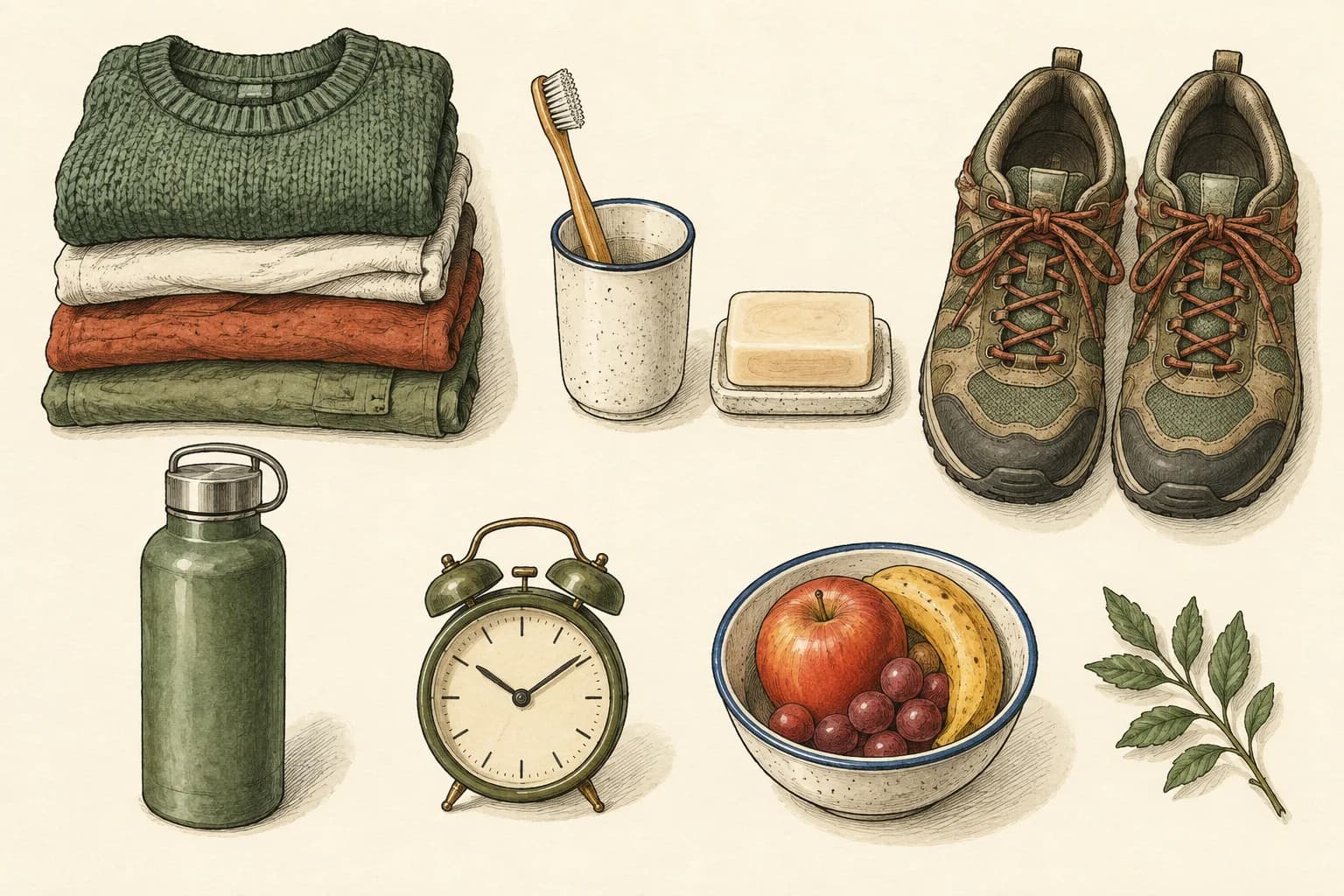
Being ready for other people starts with daily care. Build a routine you can actually follow at home and adapt it for camp, travel, and busy school days.
Before you begin
Bring along
- Personal supplies for the task
- A simple written plan
Support & boundaries
Choose an age-appropriate task with your leader or trusted adult. Outdoor practice follows the approved route, buddy, and supervision plan; adapt the challenge to your abilities.
01 / Learn
Understand the skill
- Basic hygiene, clean clothes, regular meals, and organized supplies support daily readiness.
- A routine works best when it is linked to a predictable cue, such as finishing breakfast.
- People have different health, sensory, and access needs; choose practical adaptations with a trusted adult.
02 / Practice
Try it, step by step
- 1
List your morning essentials: wash, brush teeth, dress, eat, and check what the day requires.
- 2
Set out supplies the night before and give frequently used items a consistent home.
- 3
Choose a short evening reset: put away belongings, prepare tomorrow's bag, and tidy shared space.
- 4
Try the routine for several days. Move one step if you keep missing it.
- 5
Build a small travel kit and check that it has the supplies you personally need.
Common mistakes to avoid
- Rely on trying harder to remember during the rush.
- Treating a successful practice attempt as permission to skip the supervision or checks for a real task.
Your call
You keep forgetting the same item in the morning. What would help?
03 / Demonstrate
Show what you can do
Use these prompts with a mentor. This practice checklist resets when you leave; record your overall stage below in the signed-in manual.
0 of 3 reviewed together
Mentor notes & sources
Help someone learn
- Teach routines without commenting on someone's body, smell, or family circumstances in public.
- Offer spare supplies discreetly and make adaptations normal.
Start together, then let the learner take responsibility at an appropriate level. Offer a shorter task, a different role, or more practice time when useful. Review the demonstration criteria together; advanced practice never removes supervision requirements.
Reference shelf
Original program lessons informed by these references. Equipment manuals, current local rules, and qualified instruction govern technical practice.
- Art of Manliness: practical skills ↗
Topic inspiration; equipment manuals and qualified instructors govern technical practice
- Search Institute: developmental relationships ↗
Care, support, challenge and youth agency
Edition updated 2026-09-28. Program learning material; not a professional qualification.
04 / Apply · In Action
Ready for tomorrow
Make and try a short evening routine that prepares your bag, clothes, and personal-care supplies.
What success looks like
Show your checklist after several days and one adjustment you made.
Talk it through
Which cue helped you remember without being reminded?
05 / Teach · Take it further
Adapt your routine for an overnight trip.