Rest, movement, and readiness
Build steady habits that prepare you for the activities you enjoy.
Skill 2.2 · About 25 minutes to begin
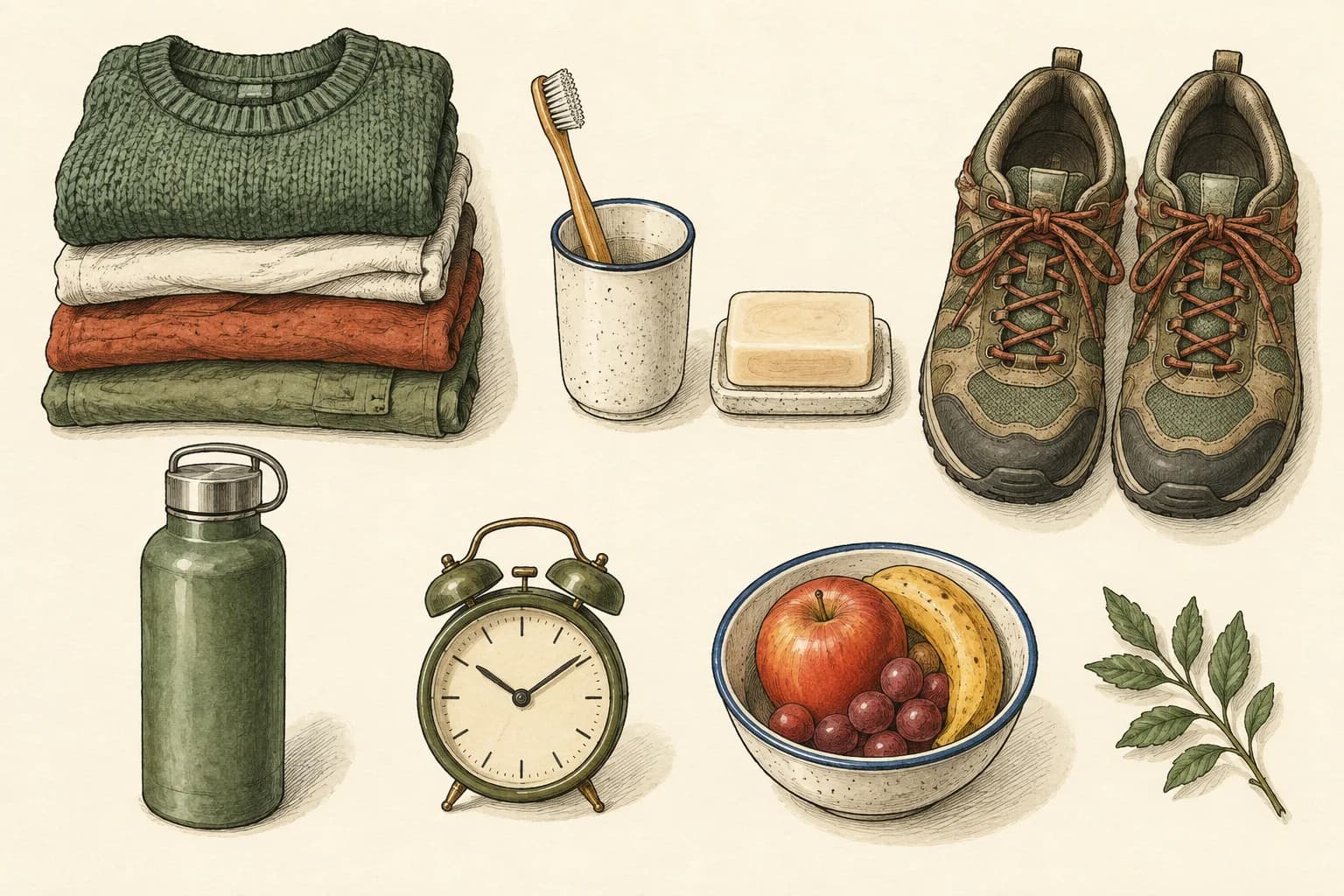
You do not need to be the fastest person in the group to be ready for adventure. Consistent movement, enough rest, food, and gradual practice matter more than proving yourself on one hard day.
Before you begin
Bring along
- Personal supplies for the task
- A simple written plan
Support & boundaries
Choose an age-appropriate task with your leader or trusted adult. Outdoor practice follows the approved route, buddy, and supervision plan; adapt the challenge to your abilities.
01 / Learn
Understand the skill
- CDC sleep guidance is 9–12 hours for ages 6–12 and 8–10 hours for ages 13–17.
- Build activity gradually and adapt it to your body and any guidance from your healthcare team.
- Pain, dizziness, or feeling unwell is a reason to stop and tell an adult, not a test of toughness.
02 / Practice
Try it, step by step
- 1
Choose an activity you enjoy and a realistic time to do it this week.
- 2
Work backward from your wake-up time to allow enough sleep and a quiet wind-down.
- 3
For an upcoming hike, start with an easy walk and practice in the footwear you will use.
- 4
Notice how you feel afterward. Increase difficulty gradually with adult guidance.
- 5
Review your plan after a week and make one change that helps you keep it.
Common mistakes to avoid
- Keep going to show determination.
- Treating a successful practice attempt as permission to skip the supervision or checks for a real task.
Your call
A practice walk causes pain and dizziness. What should you do?
03 / Demonstrate
Show what you can do
Use these prompts with a mentor. This practice checklist resets when you leave; record your overall stage below in the signed-in manual.
0 of 3 reviewed together
Mentor notes & sources
Help someone learn
- Provide different distances, paces, and useful roles so everyone can participate.
- Praise preparation and consistency; avoid weigh-ins or public fitness rankings.
Start together, then let the learner take responsibility at an appropriate level. Offer a shorter task, a different role, or more practice time when useful. Review the demonstration criteria together; advanced practice never removes supervision requirements.
Reference shelf
Original program lessons informed by these references. Equipment manuals, current local rules, and qualified instruction govern technical practice.
- CDC: sleep by age ↗
Sleep needs and routines
Edition updated 2026-09-28. Program learning material; not a professional qualification.
04 / Apply · In Action
Build a sustainable week
Plan a week with age-appropriate sleep time and movement you enjoy. Try an easy practice outing suited to your abilities.
What success looks like
Explain how your plan allows rest and when you would stop and ask for help.
Talk it through
What made your plan realistic rather than impressive on paper?
05 / Teach · Take it further
Plan an inclusive practice activity with more than one pace or role.